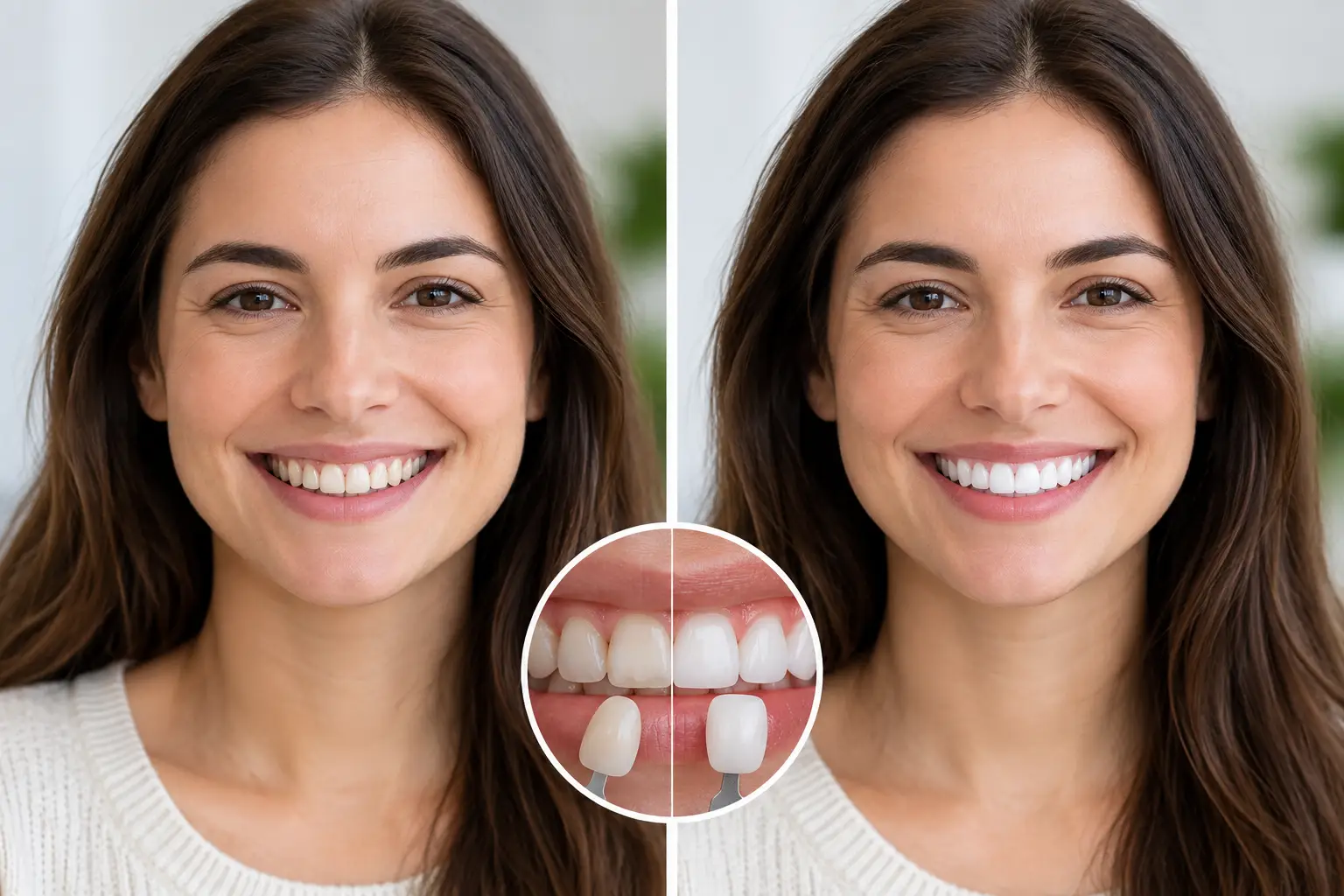
A veneer transformation should look like a better version of your own smile, not like someone else’s teeth. Looking at veneers before and after examples can help you see what is possible, but the most meaningful changes are often the details: a chipped edge disappears, uneven teeth look balanced, discoloration is covered, and the smile fits the person’s face naturally.
The best results are never one-size-fits-all. Your tooth shape, bite, gumline, facial proportions, and goals all influence what a dentist recommends. A bright, highly symmetrical smile may be right for one patient, while another may want subtle refinements that preserve more of their natural character.
What Veneers Can Change Before and After
Porcelain veneers are thin, custom-made shells that bond to the front surfaces of teeth. They are commonly used to improve the visible teeth in the smile zone, especially when concerns involve color, shape, spacing, or minor damage.
In before-and-after cases, patients often see a difference in one or more of these areas: teeth that appear too short become more proportionate, small gaps are visually closed, worn edges regain a smoother outline, and teeth with stubborn discoloration take on a more consistent shade. Veneers can also make mildly crowded or irregular teeth appear straighter without orthodontic treatment in certain cases.
That said, veneers do not move teeth or correct every bite problem. If teeth are significantly crowded, rotated, or positioned incorrectly, aligners or orthodontic treatment may create a healthier and more conservative foundation first. If decay, gum disease, or unstable bite forces are present, those issues should be addressed before cosmetic treatment.
Veneers Before and After Examples by Concern
Chipped, Worn, or Uneven Front Teeth
One of the most dramatic yet natural-looking veneer examples involves front teeth with chips, uneven lengths, or worn edges. Wear can make teeth look shorter over time, particularly for patients who grind their teeth or have an uneven bite.
After veneers, the front teeth can appear more even and youthful. The goal is not to make every tooth identical. A skilled design accounts for how the upper teeth follow the curve of the lower lip, how much tooth shows when you speak, and the subtle variations that keep a smile from looking artificial. If grinding is a concern, a night guard may be recommended to help protect the veneers.
Deep Stains That Do Not Respond to Whitening
Whitening can be an excellent option for many types of yellowing, but it does not always change intrinsic stains caused by medications, trauma, aging dental work, or naturally dark tooth structure. In these cases, veneer before-and-after results can show a more uniform and lasting improvement in color.
The right shade depends on the patient. Some people want a noticeably brighter Hollywood-style smile, while others prefer a softer shade that blends with their complexion and surrounding teeth. Choosing the brightest possible shade is not always the most natural choice, especially when veneers are being placed on only a few teeth.
Small Gaps and Black Triangles
A small space between the front teeth may be closed with veneers when the teeth are otherwise healthy and well positioned. Before-and-after examples can show a smoother, more continuous smile line without the appearance of a visible gap.
However, not every space should be covered with veneers. Some gaps are related to gum recession or the shape of the teeth near the gums, often called black triangles. Closing them may require careful planning to avoid veneers that look too wide or bulky. In some situations, orthodontics, bonding, gum treatment, or a combination of services may offer the better result.
Misshapen or Naturally Small Teeth
Some patients have naturally small, narrow, or peg-shaped teeth that make the smile look uneven. Veneers can add width, length, and symmetry while maintaining a realistic transition between each tooth.
This type of transformation is especially dependent on proportion. Teeth that are made too long can look distracting, while teeth that are too wide can appear flat. Digital imaging, photographs, models, and a preview smile can help guide decisions before the final porcelain restorations are created.
Older Bonding, Fillings, or Mismatched Restorations
Composite bonding and fillings can be useful, conservative treatments, but they may stain, chip, or lose their polished appearance over time. When several front teeth have mismatched older restorations, veneers may create a more consistent appearance.
A dentist will still evaluate each tooth individually. A veneer may be appropriate for one tooth, while a crown may be needed for a tooth with more extensive damage. The strongest cosmetic plan is the one that respects both appearance and long-term tooth health.
What Makes a Natural-Looking Result
The most convincing after photos rarely come from making teeth uniformly white and perfectly square. Natural smile design is more nuanced. It considers translucency, surface texture, tooth proportions, gum contours, and the way light reflects from porcelain.
Porcelain can be layered and shaped to mimic the subtle depth of natural enamel. The edges may be softened rather than sharply cut, and the shade can include gentle variations instead of a single opaque color. These choices matter, particularly in close conversation, photographs, and bright California sunlight.
Your facial features matter too. A smile should complement your lips, face shape, age, and personality. Someone who wants a refined, understated change may choose a different design than someone seeking a bolder cosmetic makeover. Neither goal is wrong, as long as expectations are clear and the treatment is planned carefully.
How to Evaluate Before-and-After Photos
Before-and-after galleries can be useful, but they should start a conversation rather than make the decision for you. Look for cases that resemble your own concerns, such as worn teeth, spacing, discoloration, or uneven shapes. Then pay attention to whether the final smile looks balanced with the patient’s lips and gums.
Ask whether the photos show the same lighting and angle, and whether the work involved veneers alone or additional treatment. Whitening, gum contouring, orthodontics, crowns, or implants can all affect the final result. An honest consultation explains the full treatment plan instead of presenting every transformation as a simple veneer case.
It is also helpful to ask about the number of veneers placed. Some patients need only two veneers to improve specific front teeth. Others choose six, eight, or more veneers to create consistency across the visible smile. The ideal number depends on how broadly your smile shows and how much color or shape correction is needed.
The Planning Process Matters as Much as the Porcelain
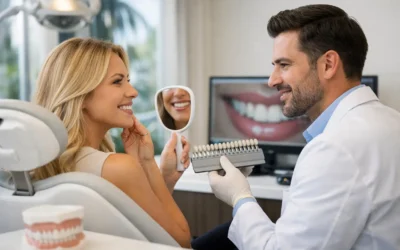
A beautiful result begins with a thorough exam. Your dentist should evaluate your teeth, gums, bite, existing restorations, and oral health before recommending veneers. Photos and digital scans can help create a plan that is tailored to your smile rather than copied from a trend.
Many patients benefit from a temporary preview or mock-up. This allows you to see and feel proposed changes in length and shape before the final veneers are made. It is a valuable opportunity to discuss whether the teeth feel too long, too short, too bright, or not quite right for you.
At West Hollywood Smile Dental, cosmetic care is approached with the same attention given to long-term dental health. If a patient needs whitening, gum treatment, aligners, restorative care, or protection from teeth grinding before veneers, having those services available in one office can make planning more coordinated and comfortable.
The Trade-Offs to Understand
Veneers are a durable cosmetic option, but they are not maintenance-free. Depending on the type of veneer and the amount of preparation needed, treatment may involve removing a small amount of enamel. Porcelain veneers also cannot whiten later, so shade selection should be made thoughtfully.
They can last for many years with good home care, routine dental visits, and protection from excessive force, but they may eventually need repair or replacement. Avoiding habits such as biting ice, opening packages with your teeth, or chewing hard objects helps reduce the risk of chips or fractures.
The right question is not simply, “Can veneers change my smile?” It is, “Will this plan give me a healthy, believable result that I will still like years from now?” A personalized consultation can turn the inspiration from before-and-after examples into a smile design that feels genuinely like yours.