
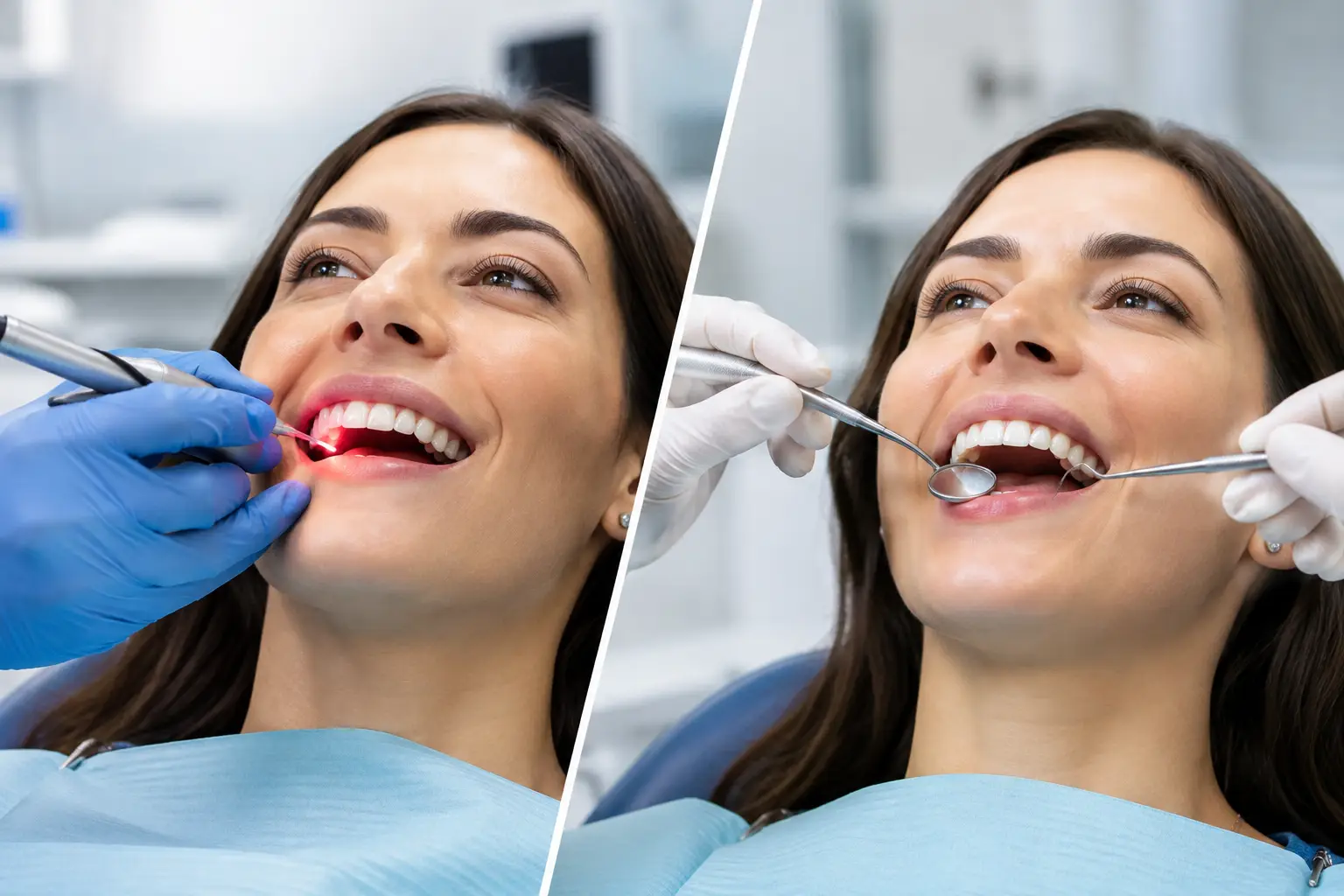
Bleeding when you brush, persistent bad breath, or gums that seem to be pulling away from your teeth deserve more than a quick fix. When comparing laser versus traditional gum treatment, the right choice is not simply about choosing newer technology. It is about identifying the stage of gum disease, protecting the bone around your teeth, and selecting care that feels manageable for you.
At West Hollywood Smile Dental, treatment recommendations are personalized. Some patients can benefit from laser-assisted therapy, while others need a carefully performed deep cleaning or periodontal surgery to reach the areas where infection is active. The goal is the same in every case: healthier gums, better comfort, and the best possible chance of keeping your natural teeth.
What gum treatment is designed to address
Gum disease begins when plaque bacteria collect along and below the gumline. In its earliest stage, called gingivitis, gums may look red, feel tender, or bleed easily. Professional cleanings and more consistent home care can often reverse gingivitis before lasting damage occurs.
When bacteria move deeper under the gums, the condition becomes periodontitis. The gums can separate from the teeth and create periodontal pockets, where bacteria and hardened deposits are difficult to remove with brushing alone. Over time, periodontitis can damage the bone that supports your teeth. Treatment is meant to reduce infection, clean these deeper areas, and make the gums easier to maintain.
The best approach depends on pocket depth, bone loss, the amount of tartar below the gums, gum tissue shape, medical history, and how your mouth responds to initial treatment. A thorough exam and X-rays provide much more useful guidance than choosing a method based on comfort alone.
Laser versus traditional gum treatment: the key difference
Traditional gum treatment describes several well-established techniques. For mild to moderate periodontal disease, this often means scaling and root planing, commonly called a deep cleaning. Using specialized instruments, the dentist or hygienist removes plaque and tartar from below the gumline and smooths the root surfaces so bacteria have a harder time adhering.
For more advanced disease, traditional periodontal surgery may be recommended. The gums are gently moved back to allow direct access to deep deposits and affected root surfaces. Depending on the situation, treatment may also include bone grafting, tissue grafting, or reshaping areas that make plaque control difficult.
Laser gum treatment uses concentrated light energy. In periodontal care, a laser may be used to reduce bacteria within periodontal pockets, remove diseased or inflamed tissue, and support gum healing. It can be part of a laser-assisted periodontal treatment plan or used alongside scaling and root planing. Not every laser procedure is the same, and the specific laser, technique, and intended purpose matter.
A laser does not automatically remove heavy tartar or restore bone lost to gum disease. That is why laser care is frequently an adjunct to careful mechanical cleaning rather than a substitute for it. If hard deposits are firmly attached to tooth roots, they still need to be physically removed.
Comfort, bleeding, and recovery
Comfort is one reason many patients ask about laser dentistry. Laser treatment can often be precise, and some patients experience less bleeding and swelling than they expect with conventional gum procedures. In selected cases, it may also reduce the need for sutures. Local anesthetic is still commonly used, especially when treating deeper pockets.
Traditional deep cleaning is also designed to be comfortable. Numbing medication can be used so treatment is not painful, and many appointments are completed by section, allowing patients to take breaks if needed. Afterward, temporary tenderness, sensitivity, or minor bleeding can occur as the gums begin to heal.
Recovery varies more by the severity of disease and the extent of treatment than by the word “laser” or “traditional.” A patient receiving a limited laser-assisted procedure may return to normal routines quickly. A patient with significant inflammation, deep pockets, or surgical needs may need a longer recovery period regardless of the technology used.
Following aftercare instructions makes a meaningful difference. That may include gentle brushing, a prescribed rinse, avoiding smoking, choosing softer foods briefly, and attending follow-up visits so healing can be evaluated.
Which option gives better results?
There is no honest one-size-fits-all answer. Laser treatment can be a valuable option when used for an appropriate clinical purpose by a trained dental professional. It may help manage bacteria and inflamed tissue in periodontal pockets while supporting a gentler treatment experience.
Traditional scaling and root planing remains a highly effective first-line treatment for many patients with periodontal disease. It directly addresses tartar and bacterial buildup below the gumline. When the disease is advanced, conventional surgery may offer essential visibility and access that allow the doctor to thoroughly treat deep areas and address bone or tissue defects.
Success is measured over time, not only by how an appointment feels that day. Your dental team will look for reduced bleeding, shallower pocket measurements, healthier gum appearance, improved comfort, and stable bone support on future X-rays. Regular periodontal maintenance is central to maintaining those gains.
When laser-assisted treatment may be a good fit
Laser therapy may be considered when inflamed gum tissue and bacteria are present in pockets that need additional management. It can also appeal to patients who are especially concerned about bleeding, swelling, or a more conservative approach to soft-tissue treatment. In some cases, lasers are useful for contouring excess gum tissue or managing other soft-tissue concerns.
That said, suitability must be determined after an exam. A laser cannot make severe bone loss disappear, and it cannot replace grafting or surgical treatment when those procedures are clinically necessary.
When traditional treatment may be the better choice
Deep cleaning is often the most direct and appropriate solution when buildup below the gumline is the primary concern. Traditional periodontal surgery may be recommended when pockets remain deep after initial therapy, tartar is inaccessible, bone contours need treatment, or regeneration procedures are needed to protect the teeth.
Choosing traditional care does not mean settling for an outdated or uncomfortable experience. Modern anesthesia, gentle technique, clear communication, and personalized scheduling can make established periodontal treatments feel far less intimidating than many patients expect.
Questions to ask before choosing a gum treatment
A productive conversation with your dentist should go beyond whether a laser is available. Ask what stage of gum disease you have, what the X-rays show, and whether hard tartar is present below the gums. It is also reasonable to ask whether laser treatment would be used alone or with scaling and root planing, what recovery may look like, and how the practice will measure improvement.
Cost and insurance coverage can differ depending on the procedure and your plan. Request a clear explanation of recommended treatment, expected maintenance visits, and available payment options before beginning care. Understanding the full plan helps you make a decision based on health needs and practical considerations, not pressure.
Lasting gum health requires maintenance
Even excellent periodontal treatment cannot stop gum disease permanently without ongoing care. The bacteria that contribute to periodontitis naturally return, particularly in hard-to-reach areas below the gumline. Many patients benefit from periodontal maintenance visits more often than standard cleanings, based on their individual risk and response to treatment.
At home, brush twice daily with a soft-bristled toothbrush, clean between teeth every day, and follow any recommendations for therapeutic rinses or specialized tools. If you smoke or vape, reducing or stopping can significantly support gum healing and long-term periodontal health.
If your gums are bleeding or your teeth feel different when you bite, schedule an evaluation sooner rather than waiting for discomfort to become severe. A calm, thorough exam can clarify what your gums need and help you move forward with care that protects your smile for years to come.