
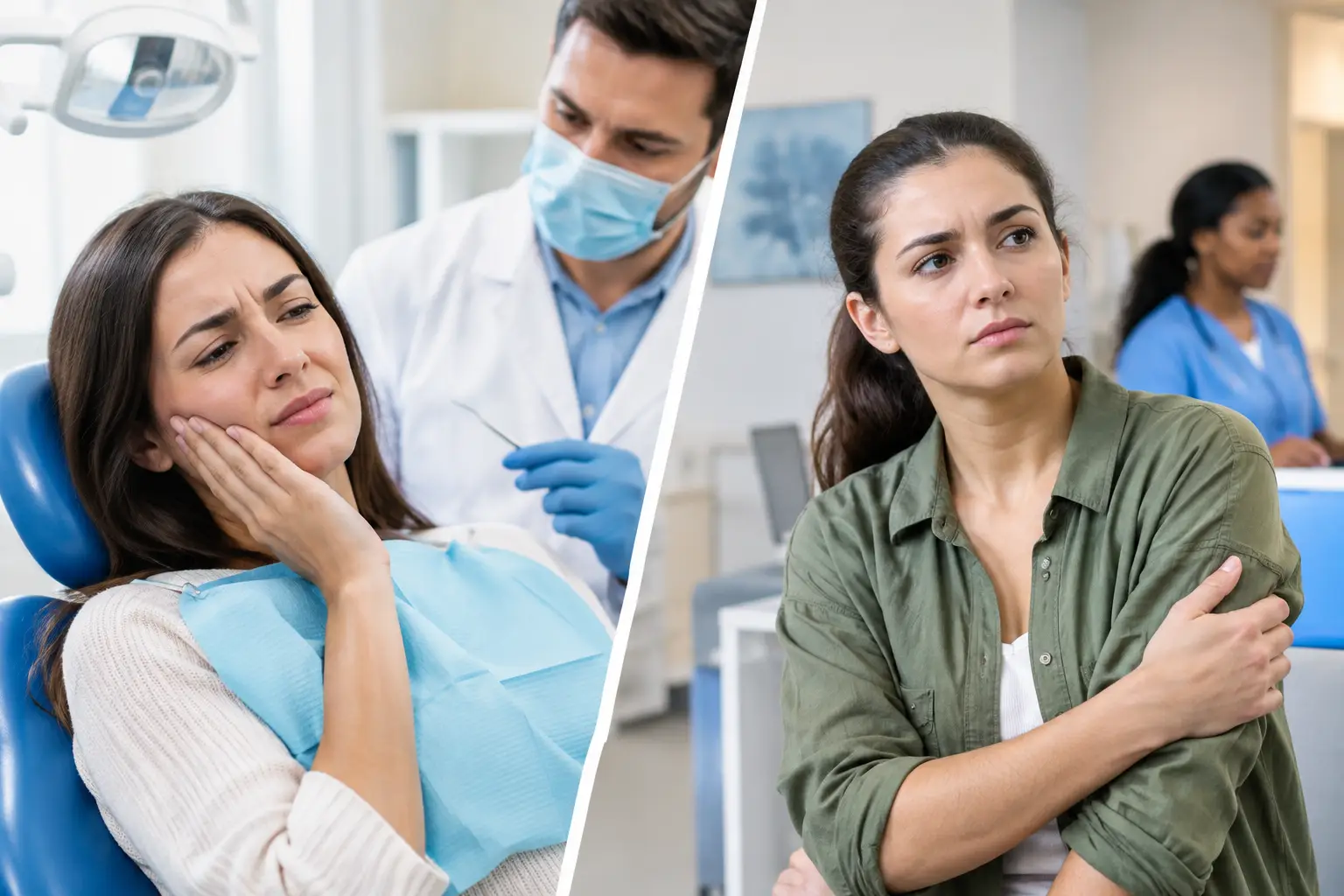
A throbbing tooth can turn a normal workday, dinner, or family weekend into a question with real urgency: emergency dentist or urgent care? The right choice depends on what is happening, how severe your symptoms are, and whether your overall health may be at risk. For most tooth, gum, crown, filling, and jaw concerns, an emergency dentist is the best first call because dental offices can identify and treat the source of the problem, not simply manage the discomfort.
Emergency Dentist or Urgent Care: The Key Difference
Urgent care centers are valuable for many non-life-threatening medical problems, but they are usually not equipped to provide definitive dental treatment. A clinician may evaluate swelling, prescribe medication when appropriate, or help rule out a broader medical issue. However, urgent care generally cannot drain a dental abscess, perform a root canal, reattach a crown, repair a broken tooth, or treat the gum and bone conditions causing the pain.
An emergency dentist can examine your teeth and gums, take dental X-rays when needed, and create a treatment plan that addresses the cause. Depending on your condition, that may mean placing a temporary restoration, adjusting a painful bite, treating an infection, beginning root canal treatment, replacing a lost filling, or arranging an extraction. This is especially important because tooth pain often returns when the underlying damage is left untreated.
There is a trade-off. If you have severe symptoms that suggest a medical emergency, the emergency room is safer than waiting for a dental appointment. But for a dental problem that is painful, disruptive, or worsening without signs of immediate danger, a dental emergency visit is usually the more direct path to relief.
When to Call an Emergency Dentist
Call an emergency dentist promptly if you have persistent tooth pain, a cracked or broken tooth, a lost filling or crown, a tooth that has been knocked loose, bleeding gums after an injury, or swelling around a tooth or gumline. These issues can become more complicated when they are ignored, even if the pain fades for a few days.
A severe toothache may come from deep decay, a damaged nerve, a cracked tooth, an infection, or pressure from an old restoration. Pain that keeps you awake, hurts when you bite, or comes with sensitivity to heat is a strong reason to seek dental care quickly. Temporary pain relief is helpful, but it is not a diagnosis.
Swelling deserves particular attention. A pimple-like bump on the gums, a bad taste in the mouth, tenderness near the jaw, or facial swelling can point to an infection. Some infections remain localized and can be treated in a dental setting. Others can spread beyond the mouth and require immediate hospital care. A dentist can help determine the right next step based on the examination and your symptoms.
West Hollywood Smile Dental understands that urgent dental pain is not convenient or predictable. A comfortable, timely evaluation can make a frightening situation feel much more manageable, while giving you clear answers about what treatment is actually needed.
Dental problems that usually belong with a dentist
If the concern is clearly centered on a tooth, restoration, gums, or bite, start with a dental office whenever possible. This includes a lost crown, broken denture, chipped veneer, cracked tooth, loosened implant restoration, painful wisdom tooth area, or a filling that has fallen out.
It also includes a tooth that has been completely knocked out. Time matters with this injury. Handle the tooth by the crown, not the root, rinse it gently if it is dirty, and try to place it back in the socket if you can do so safely. If that is not possible, keep it moist in milk or a tooth-preservation solution and seek dental care immediately. Do not scrub the root or wrap the tooth in a dry tissue.
When Urgent Care or the ER Is the Better Choice
Go to the emergency room or call 911 if you have trouble breathing or swallowing, swelling that is rapidly spreading to the face or neck, confusion, fainting, or severe uncontrolled bleeding. These symptoms can signal a potentially serious infection or injury that needs hospital-level care.
The ER is also appropriate after a major accident when you may have a broken jaw, deep cuts, a head injury, or other trauma beyond the teeth. Symptoms such as loss of consciousness, vomiting after a head injury, vision changes, or an inability to open and close your mouth normally should not wait for a routine dental evaluation.
Urgent care can be a practical option when you cannot reach a dentist and need help managing symptoms until you can be seen. For example, it may be reasonable for early evaluation of mild facial swelling, fever, or pain when you are unsure whether the problem is dental or medical. Keep in mind that medication alone often does not resolve a dental infection. Antibiotics may be necessary in certain situations, but they do not remove decay, repair a fracture, or eliminate infected tissue inside a tooth.
If urgent care provides medication, arrange dental follow-up as soon as possible. Waiting until the prescription is finished can allow the problem to return with more pain or swelling.
What to Do While You Arrange Care
The goal at home is to protect the area and stay as comfortable as possible until you can be examined. Rinse gently with warm salt water to clear debris and soothe irritated gum tissue. If there is facial swelling, place a cold compress on the outside of your cheek for short intervals. Avoid heat, which can worsen swelling in some infections.
For pain, use over-the-counter medication only as directed on the label and only if it is safe for you based on your health history and other medications. Do not place aspirin directly on a tooth or gums. It can burn soft tissue without treating the source of pain. Avoid chewing on the affected side, and choose softer foods if biting is uncomfortable.
If a crown comes off, save it and bring it with you. Do not use household glue to put it back on. If a filling is lost, keep the area clean and avoid sticky foods. A temporary dental repair product from a pharmacy may protect the tooth briefly, but it should not replace a professional visit.
For a chipped tooth, save any fragments you can find. Rinse your mouth with water, use a cold compress for swelling, and cover a sharp edge with dental wax if it is irritating your tongue or cheek. A small chip may not require same-day care, but a larger fracture, exposed inner tooth tissue, or pain should be evaluated urgently.
Why Waiting Can Make Dental Emergencies Harder
People often postpone care because the pain comes and goes, a broken tooth is not visible when they smile, or they worry that treatment will be complicated. Unfortunately, dental problems rarely improve on their own. A small crack can deepen. Decay can reach the nerve. A loose crown can leave the tooth underneath vulnerable. Infection can become more painful and more expensive to treat when it spreads.
Early care is also usually more conservative. Repairing a small fracture with bonding or a filling may be simpler than needing a crown later. Treating inflammation around a tooth can sometimes preserve it before infection reaches the pulp. When a tooth cannot be saved, timely treatment can still relieve pain and protect nearby teeth and bone.
For patients who feel anxious about dentistry, an urgent visit can be especially intimidating. Gentle, personalized care matters in these moments. Tell the dental team about your anxiety, past experiences, medical conditions, and the medications you take. Clear communication helps the team plan for your comfort and explain each option without pressure.
A Simple Decision for a Stressful Moment
Choose an emergency dentist when the issue involves a tooth, gums, dental work, or a dental injury and you are medically stable. Choose urgent care when you need interim medical guidance and cannot access a dentist. Choose the ER immediately for breathing or swallowing difficulty, severe spreading swelling, heavy bleeding, major facial trauma, or signs of a serious medical emergency.
When you are in pain, you do not need to diagnose the problem alone. Call a dental office, describe your symptoms clearly, and ask how soon you should be seen. A prompt conversation can help you move from uncertainty to the right care, with your comfort and long-term oral health protected.