
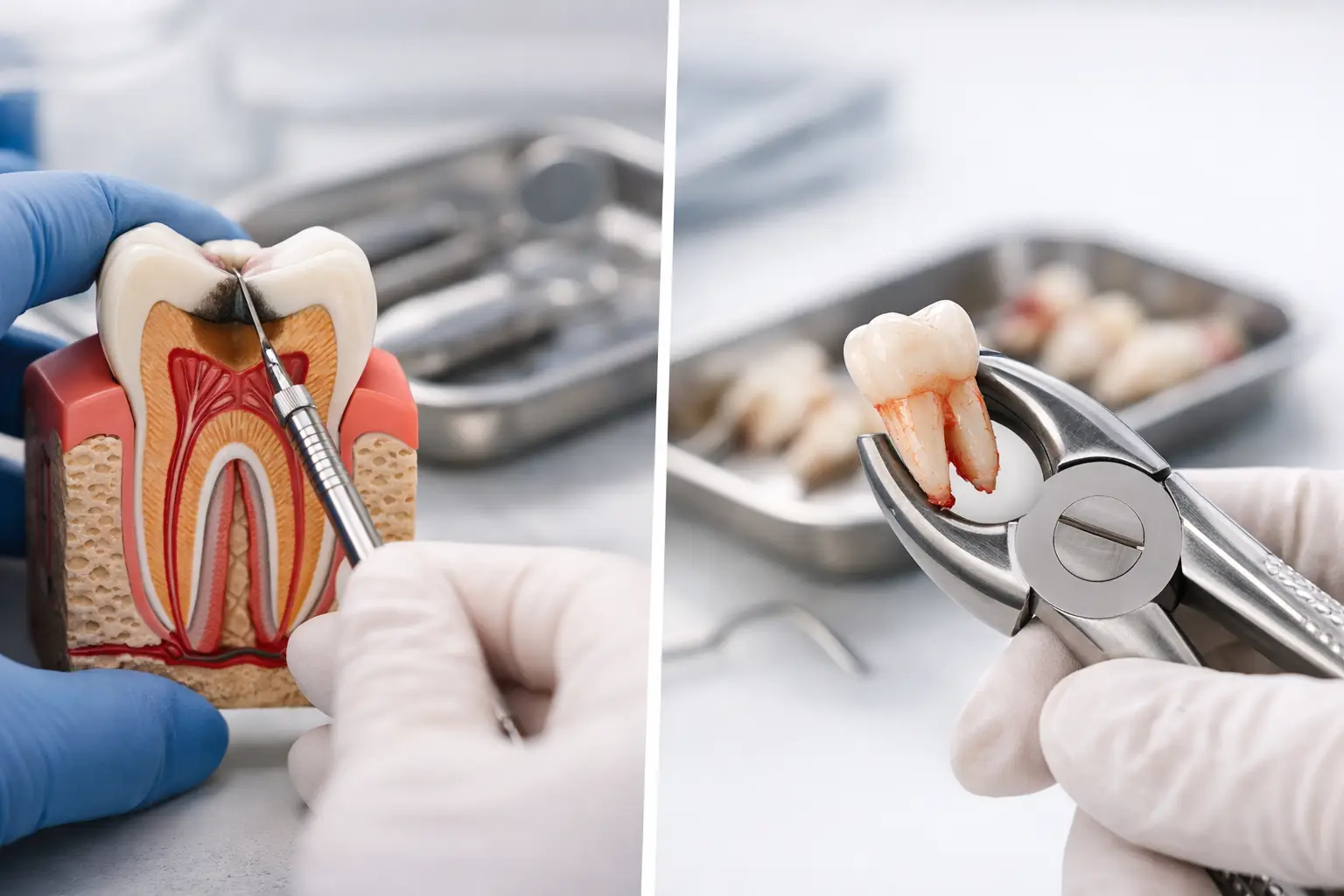
Root Canal vs Extraction: Which Is Better?
That sharp toothache that keeps you up at night usually leads to one urgent question: root canal vs extraction – which one is the better choice? The honest answer is that it depends on the condition of the tooth, your long-term goals, your budget, and how quickly you want relief. What matters most is choosing the treatment that solves the problem without creating a bigger one later.
For many patients, the conversation starts with fear. Some worry that a root canal will be painful. Others assume pulling the tooth is simpler and cheaper. Both treatments have a place in dentistry, but they do very different jobs. A root canal is designed to save a natural tooth. An extraction removes it completely. That distinction affects everything from chewing comfort to future dental costs.
Root canal vs extraction: the basic difference
A root canal is usually recommended when the inside of the tooth, called the pulp, is infected or inflamed but the tooth itself can still be restored. During treatment, the infected tissue is removed, the canals are cleaned and sealed, and the tooth is typically protected with a crown. The goal is to keep your natural tooth in place.
An extraction is recommended when the tooth cannot be predictably saved or when removing it is the healthiest option. That can happen if there is severe decay below the gumline, a major crack into the root, advanced bone loss, or damage that leaves too little healthy structure to support a restoration.
If you are comparing the two, it helps to think beyond the immediate appointment. Extraction may remove the painful tooth faster, but it also creates a gap that often needs to be replaced with an implant, bridge, or denture to avoid shifting and bite problems. A root canal usually takes more effort upfront but can preserve your bite and appearance with fewer long-term changes.
When a root canal is usually the better choice
Whenever a tooth can be saved in a predictable way, keeping it is often the preferred option. Natural teeth help you chew more comfortably, maintain proper spacing, and support the jawbone and surrounding bite. They also tend to feel more natural than any replacement.
A root canal may be the better choice when the infection is limited to the pulp and the outside of the tooth is strong enough to rebuild. It is also often ideal for front teeth and visible teeth, where preserving your natural smile matters. For molars, saving the tooth can make a big difference in chewing strength.
Many people are surprised to learn that modern root canal treatment is generally no more uncomfortable than getting a filling once the area is numb. In a practice that emphasizes gentle care and patient comfort, the process is far more manageable than its old reputation suggests. The real source of pain is often the infection itself, not the treatment.
Another advantage is stability. Saving a tooth helps keep nearby teeth from drifting. It also avoids the need to decide right away how to replace a missing tooth. If the treated tooth is restored properly and cared for well, it can last for many years.
When extraction makes more sense
There are situations where extraction is not the second-best option. It is simply the right one. If a tooth is cracked vertically into the root, badly broken below the gumline, or so decayed that it cannot support a filling or crown, trying to save it may only delay the inevitable.
Extraction may also make sense if gum disease has severely loosened the tooth or if a wisdom tooth is causing pain, infection, or damage to nearby teeth. In some cases, removing a problem tooth can provide faster relief and a clearer path to rebuilding your smile.
The key issue is what comes next. Once a tooth is removed, the bone in that area can begin to shrink over time. Neighboring teeth may tilt. The opposing tooth can drift out of position. That is why an extraction plan should include a conversation about replacement, especially for teeth that affect chewing, appearance, or bite balance.
Pain, recovery, and what patients usually experience
Pain is often the factor people focus on most, but it helps to separate the procedure from the healing period. During a root canal, the tooth is numbed thoroughly. Most patients feel pressure and movement, not sharp pain. Afterward, mild soreness is common for a few days, especially if the tooth was badly infected before treatment.
An extraction can also be comfortable during the procedure with proper numbing and, when appropriate, sedation options. Recovery is different, though. Since the tooth is removed, the body has to heal an open socket. That can mean swelling, tenderness, and temporary limits on eating. Surgical extractions usually involve a longer recovery than simple ones.
So which hurts more? There is no one answer. A straightforward root canal on a restorable tooth may feel easier overall than removing that same tooth. On the other hand, if the tooth is beyond saving and causing severe infection, extraction may bring the quickest relief. This is one reason a personalized exam matters more than general advice online.
Cost now vs cost later
Patients often ask whether extraction is cheaper. In many cases, the upfront fee for pulling a tooth is lower than the fee for a root canal and crown. But that is only part of the financial picture.
If you extract a tooth and do not replace it, you may face other problems later, including shifting teeth, uneven wear, and changes in your bite. If you do replace it, the cost of an implant, bridge, or denture can exceed the cost of saving the tooth in the first place. A root canal may look more expensive on day one, yet be more cost-effective over time.
That said, budgets are real. For some patients, an extraction followed by a planned restoration is the most workable path. Honest dentistry means looking at both the clinical ideal and the practical reality, then helping you choose a treatment you can feel confident about.
Root canal vs extraction for long-term oral health
Long-term oral health usually favors preserving natural teeth when possible. Your own tooth root helps maintain bone and supports normal function in a way that is hard to fully replicate. Even excellent replacements do not behave exactly like a natural tooth.
Still, keeping a tooth at all costs is not always the best decision. A weak tooth that needs repeated treatment may become more stressful and more expensive than removing it and placing a strong, well-planned replacement. The better question is not simply, can this tooth be saved? It is, can this tooth be saved predictably and comfortably in a way that serves you well for years?
That is where a thorough evaluation matters. X-rays, bite assessment, symptoms, gum health, and the amount of remaining tooth structure all play a role. Two teeth with similar pain can require completely different solutions.
Questions to ask before you decide
If your dentist says you need either a root canal or an extraction, ask how much healthy tooth remains, whether the tooth will need a crown, and what the long-term outlook is with each option. You should also ask what happens if the tooth is removed and not replaced.
It is also reasonable to talk about timing, comfort, and costs. A good treatment discussion should be clear, not rushed. You deserve to understand the trade-offs, especially if the tooth is visible, important for chewing, or part of a larger treatment plan.
In a full-service office, this conversation can be especially helpful because you can look at the whole picture in one place. If a tooth can be saved, that option can be weighed carefully. If it cannot, replacement options such as implants or bridges can be discussed right away without sending you from office to office.
The right choice is the one that protects your future smile
Choosing between a root canal and extraction is rarely just about getting out of pain today. It is about what will let you eat comfortably, protect nearby teeth, and keep your smile healthy over time. In many cases, saving the tooth is worth it. In others, removal is the cleaner and more predictable path.
If you are dealing with tooth pain, swelling, or a tooth that has already been told it may not be salvageable, do not wait too long to get it evaluated. The sooner you understand your options, the more likely you are to have a comfortable, personalized solution that supports your smile for the long run.