A mint can cover an odor for a few minutes, but it cannot remove the bacteria, dryness, or dental problem creating it. The top causes of bad breath are often manageable, and persistent breath changes are a useful reason to schedule a dental conversation rather than feel embarrassed or try to diagnose the issue alone.
Bad breath, also called halitosis, is very common. It can be temporary after a strongly flavored meal, or it can linger because odor-producing bacteria are collecting in the mouth. The American Dental Association explains that most bad breath starts in the mouth, making a dental exam a sensible first step when the problem continues.
Top causes of bad breath that begin in the mouth
Bacteria on the tongue
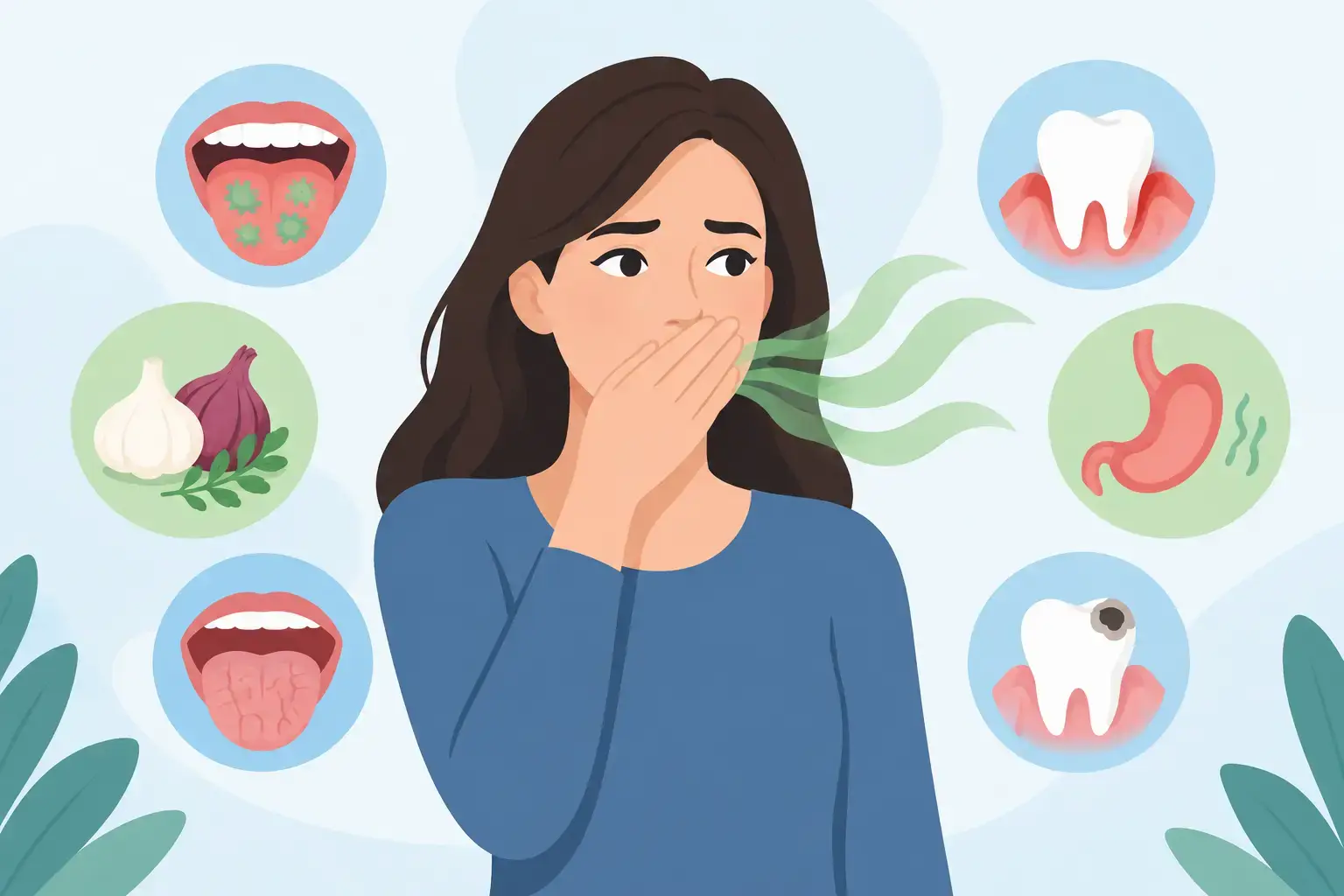
The tongue has tiny grooves and a textured surface that can hold bacteria, food particles, and dead cells. Certain bacteria break down proteins and release sulfur-containing compounds, which are responsible for the familiar unpleasant odor associated with halitosis.
Brushing teeth without cleaning the tongue may leave a major source of odor behind. A toothbrush or tongue cleaner can help remove buildup gently, but it should not cause soreness or bleeding. If coating returns quickly or is accompanied by mouth discomfort, a dentist can help determine whether there is an underlying concern.
Plaque, tartar, and gum disease
Plaque is a sticky film of bacteria that forms on teeth every day. When it is not removed thoroughly, it can irritate the gums. Plaque that hardens into tartar cannot be brushed away at home and may create more areas where bacteria collect.
Bad breath can be one sign of gum disease, especially when it occurs alongside bleeding during brushing, swollen gums, tenderness, gum recession, or a persistent bad taste. The National Institute of Dental and Craniofacial Research notes that gum disease is caused by bacteria in plaque and may progress with few obvious symptoms at first. A professional exam can check the gums and identify whether a cleaning or additional periodontal care is appropriate.
Tooth decay, damaged restorations, or trapped food
A cavity can create a place where bacteria and food debris collect. So can a chipped tooth, an old filling with a gap around it, or a dental crown that no longer fits as intended. This does not mean every instance of bad breath signals decay, but it is one reason a lasting odor deserves attention.
Food can also become trapped between teeth, beneath a removable appliance, or around orthodontic hardware. Daily brushing matters, but cleaning between teeth is often just as important. Floss, interdental brushes, or another dentist-recommended option may be useful depending on the spacing of the teeth and any restorative work present.
Dry mouth
Saliva does more than keep the mouth comfortable. It rinses away food particles, helps control bacteria, and supports the mouth’s natural balance. When saliva flow drops, bacteria and odor can increase.
Dry mouth may happen during sleep, with mouth breathing, dehydration, tobacco use, aging, or as a side effect of some medications. The National Institute of Dental and Craniofacial Research also identifies certain health conditions and medical treatments as possible contributors. Waking with morning breath is common, but dry mouth that is frequent, uncomfortable, or accompanied by trouble swallowing should be discussed with a dentist or physician.
Sipping water may offer temporary comfort, but it will not address every cause. A dental professional can review oral factors and suggest questions to bring to the medical provider who manages any relevant medications or health conditions.
Everyday triggers versus a persistent problem
Coffee, garlic, onions, alcohol, and some spices can change breath for several hours. Fasting and low-carbohydrate diets may also alter breath because the body produces compounds called ketones when it uses fat differently for fuel. These changes may be noticeable but are not necessarily signs of a dental disease.
Tobacco is different because it can leave its own odor while also drying and irritating oral tissues. It raises the risk of gum disease and other serious oral health concerns. If quitting is part of your health plan, a medical or dental team can be a helpful source of support.
A removable denture or retainer can also retain odor if it is not cleaned as directed. Cleaning needs depend on the material and appliance type, so it is worth asking for specific instructions rather than using harsh household products that could damage it.
When bad breath may have a cause outside the mouth
Most persistent bad breath has an oral source, but not all of it does. Ongoing nasal congestion, sinus conditions, tonsil concerns, reflux, and some medical conditions can affect breath. In children, a foreign object in the nose is an uncommon but possible cause of one-sided nasal discharge and odor.
This is why a careful approach matters. A dentist can evaluate teeth, gums, the tongue, saliva, and restorative work, but may recommend medical follow-up if the mouth appears healthy or the symptoms point elsewhere. Do not stop a prescribed medication because of dry mouth or breath changes without speaking with the clinician who prescribed it.
Seek prompt medical attention for difficulty breathing or swallowing, facial swelling, fever with dental pain, or rapidly worsening swelling. Those symptoms need more than routine breath care.
What a dental visit can help clarify
A visit for bad breath is not a judgment about hygiene. It is a chance to identify a cause and make a plan that fits your needs. The dentist may ask when the odor began, whether it is worse in the morning, what home care products you use, whether your mouth feels dry, and whether you have noticed bleeding gums, tooth sensitivity, or changes in taste.
An exam can check for plaque buildup, tartar, cavities, gum inflammation, infection, and areas around restorations that may need attention. Treatment depends on what is found. Some people benefit mainly from a professional cleaning and changes to their daily routine. Others may need treatment for gum disease, tooth decay, or a problem with an existing restoration. When dry mouth or a non-dental cause seems likely, coordinated medical follow-up may be the next appropriate step.
West Hollywood Smile Dental provides preventive care, so patients can use a consultation to discuss persistent bad breath, gum health, and practical cleaning habits in a supportive setting. It is reasonable to ask: “Do you see signs of gum disease or decay?” “Could dry mouth be contributing?” and “What should I use to clean between my teeth or around my dental work?”
Small habits that support fresher breath
Consistent home care makes the biggest difference when it targets the source of odor. Brush twice daily with fluoride toothpaste, clean between teeth once a day, and gently clean the tongue. Replace a worn toothbrush, drink water regularly, and keep up with recommended dental checkups and cleanings.
Mouthwash can be useful, but it is not a substitute for removing plaque. Some rinses mainly freshen breath for a short time, while others are designed to reduce bacteria. The best choice depends on whether the concern is occasional odor, dry mouth, gum inflammation, or another issue. A dentist can help you choose without overwhelming your routine.
If bad breath persists despite careful home care, do not assume you have failed at brushing. A straightforward dental exam can turn an uncomfortable question into a clear next step and help you protect the health of your teeth and gums.