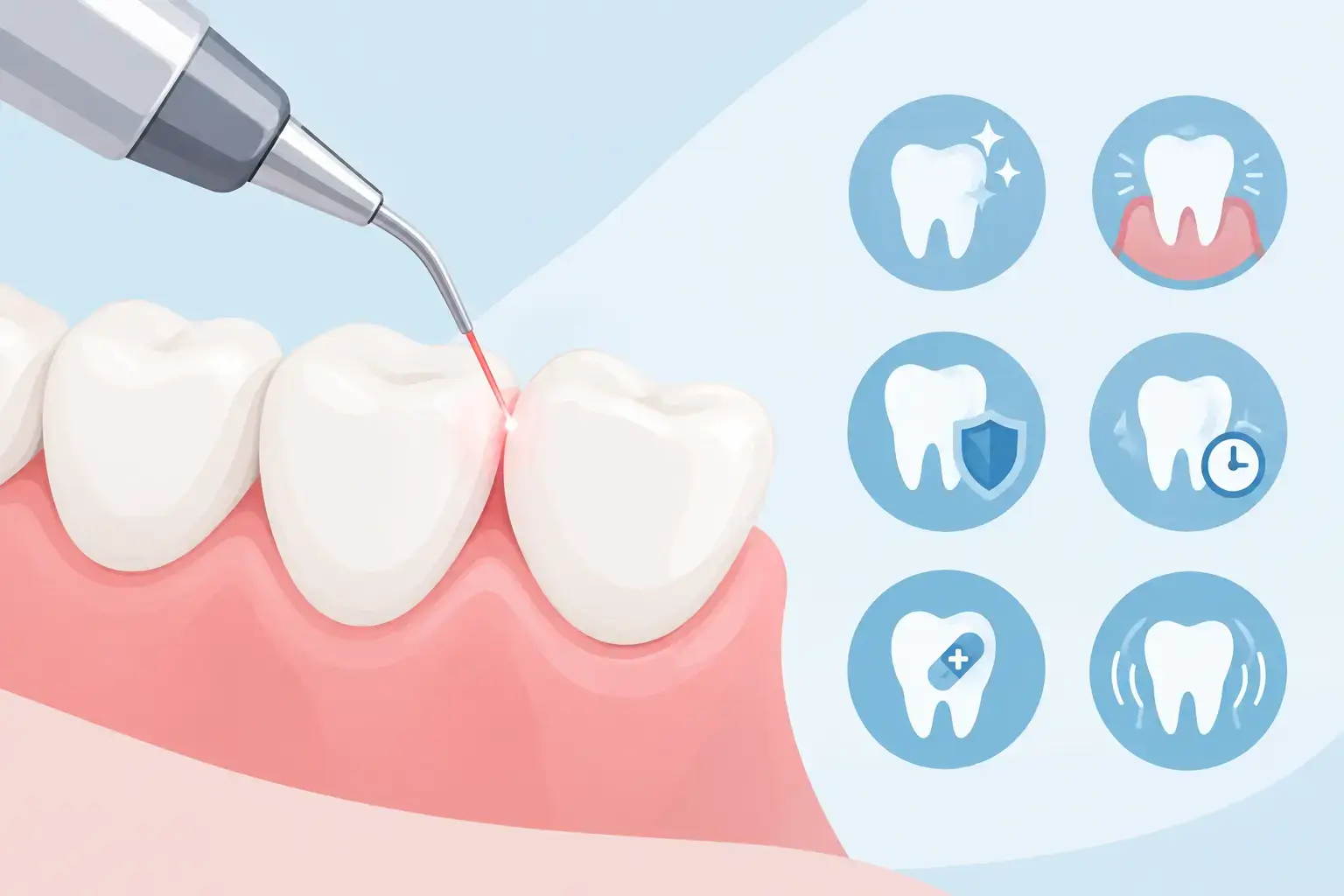
A laser may sound like a major change from a traditional dental visit, but it is simply another tool a dentist may use for certain procedures. The potential laser dentistry benefits can include more precise work on some areas of the mouth and, for selected treatments, less bleeding or swelling. The more useful question is not whether lasers are “better” in every situation. It is whether a laser is appropriate for the specific concern you and your dentist are addressing.
For adults and families considering care in West Hollywood, it helps to understand what dental lasers can and cannot do before choosing a treatment. That way, you can have a calm, informed conversation about comfort, appearance, healing expectations, and alternatives.
What dental lasers do
A dental laser directs concentrated light energy at tissue. Different types of lasers work differently. Some are designed primarily for soft tissue, such as the gums, while others may be used on hard tissue, including parts of a tooth. The wavelength, power settings, and treatment purpose all matter.
During a soft-tissue procedure, a laser can cut or reshape gum tissue while helping control bleeding. In other settings, laser energy may be used as one part of treating gum disease or addressing a small oral soft-tissue concern. Certain hard-tissue lasers may be used for selected cavity preparations or other tooth-related procedures.
This does not mean a laser replaces every familiar dental instrument. A dentist may still recommend a hand instrument, conventional drill, ultrasonic scaler, or surgical approach because it is more predictable or suitable for the area being treated. Dentistry is rarely one-size-fits-all, and the right tool depends on the diagnosis, the condition of the tooth or gums, and the goals of care.
Laser dentistry benefits can depend on the procedure
The possible advantages of laser treatment are often most noticeable with soft-tissue care. Because lasers can seal small blood vessels as they work, some procedures may involve less bleeding than conventional techniques. This can improve visibility for the dental team and may make the procedure feel more manageable for the patient.
A laser can also provide a high degree of precision. That can be helpful when a dentist needs to reshape a small amount of gum tissue, such as when addressing excess tissue around a tooth or creating a more balanced gumline. Precision does not automatically mean a cosmetic outcome will be right for every smile, however. Gum contours need to be considered alongside tooth shape, bite, gum health, and the amount of tissue that can be safely adjusted.
Some patients report that laser-based procedures feel more comfortable than alternatives, particularly when a procedure involves soft tissue. Yet comfort is personal. The location and extent of treatment, gum inflammation, anxiety level, and the need for local anesthetic can all affect the experience. A laser should never be presented as a promise of a painless visit.
Depending on the procedure, a laser may also limit swelling or reduce the need for sutures. These are potential benefits, not guarantees. Healing can vary based on the treatment performed and each patient’s overall oral and general health.
Where lasers may be used in dentistry
Laser applications vary among dental practices, and not every office offers every type of laser treatment. Common categories include soft-tissue procedures, periodontal care, cavity-related treatment, and management of certain oral lesions or sores. A dental examination is needed to determine whether any of these approaches are appropriate.
Gum reshaping and cosmetic gum concerns
When a person feels that their teeth look short because gum tissue covers more of the tooth surface, a dentist may discuss gum contouring. In appropriate cases, a soft-tissue laser may be one option for carefully reshaping the gums. This can also be considered when gum tissue has become enlarged or uneven around teeth.
Cosmetic questions deserve an honest discussion. Changing the gumline may improve proportions in some smiles, but it is not always the best first step. A dentist may first need to evaluate gum inflammation, tooth wear, bite issues, existing restorations, or the position of the teeth.
Gum disease treatment
Gum disease is an infection and inflammation of the tissues supporting the teeth. The foundation of treatment commonly includes a detailed periodontal evaluation and professional removal of plaque and tartar from above and below the gumline. In some circumstances, lasers may be used as an adjunct to conventional periodontal treatment.
An adjunct means an added tool, not a replacement for thorough cleaning or ongoing periodontal care. Research on laser use for periodontal disease has found that outcomes can vary by laser type and treatment protocol. Major periodontal guidance supports individualized care rather than treating laser therapy as a universal substitute for established treatment methods. (American Academy of Periodontology; European Federation of Periodontology clinical practice guideline.)
Cavities and tooth preparation
Some lasers can be used on tooth structure in limited situations. For certain patients, the reduced vibration and sound compared with a conventional drill may be appealing. But a laser may not be efficient or appropriate for every cavity, especially when decay is extensive, located between teeth, near an existing restoration, or requires a particular restoration design.
If a cavity needs treatment, the priorities remain the same: remove decay effectively, preserve healthy tooth structure where possible, and place a restoration that fits and functions well. The instrument used is only one part of that plan.
Limits and trade-offs to understand
A laser is not automatically the gentlest, fastest, or most effective choice. Different lasers have different capabilities, and the procedure can sometimes take longer than a conventional approach. Local anesthetic may still be recommended. In many cases, traditional instruments remain the more practical option.
Cost can also vary based on the procedure and the technology used, so it is reasonable to ask for a clear treatment estimate before moving forward. More importantly, patients should understand why a laser is being recommended and what the alternative would involve.
The American Dental Association notes that dental lasers have a range of uses, while also emphasizing that training, proper diagnosis, and appropriate clinical judgment are essential. Lasers produce heat and energy, so they require safety measures and careful technique. Protective eyewear is typically part of laser safety for patients and the dental team. (American Dental Association, Oral Health Topics: Lasers in Dentistry.)
Questions to ask at a consultation
If you are comparing options, a few direct questions can make the decision clearer. You might ask what problem the procedure is intended to solve, whether laser treatment is an option or a recommendation, and why it may be preferable in your case. Ask what type of tissue is being treated and whether local anesthetic is likely to be needed.
It is also helpful to ask about conventional alternatives. For example: Would a standard gum treatment, scaler, drill, or surgical technique achieve a similar result? What are the benefits and limitations of each approach? What could happen if treatment is delayed?
If appearance is part of your concern, ask how your gumline, bite, tooth shape, and existing dental work affect the plan. A thoughtful dentist should be able to explain the expected purpose of treatment without pressuring you toward a cosmetic choice.
West Hollywood Smile Dental can discuss your concerns, examine your teeth and gums, and help you understand the options that fit your needs. Because laser services and suitability should be confirmed during a consultation, it is best to ask directly whether a laser-based approach is available and appropriate for your recommended treatment.
A good dental decision does not depend on choosing the newest-looking tool. It comes from a clear diagnosis, realistic expectations, and a treatment plan that respects both your oral health and your comfort.