Dental Implants vs Dentures: Which Fits You?
Missing teeth change more than your smile. They can affect how you eat, how clearly you speak, and how confident you feel in everyday moments. When patients ask about dental implants vs dentures, they usually want a clear answer fast – which option will look natural, feel comfortable, and hold up over time?
The honest answer is that both can be excellent solutions. The right choice depends on your oral health, bone support, budget, goals, and how much maintenance you are comfortable with. A thoughtful exam matters because what works beautifully for one patient may be frustrating for another.
Dental implants vs dentures: the basic difference
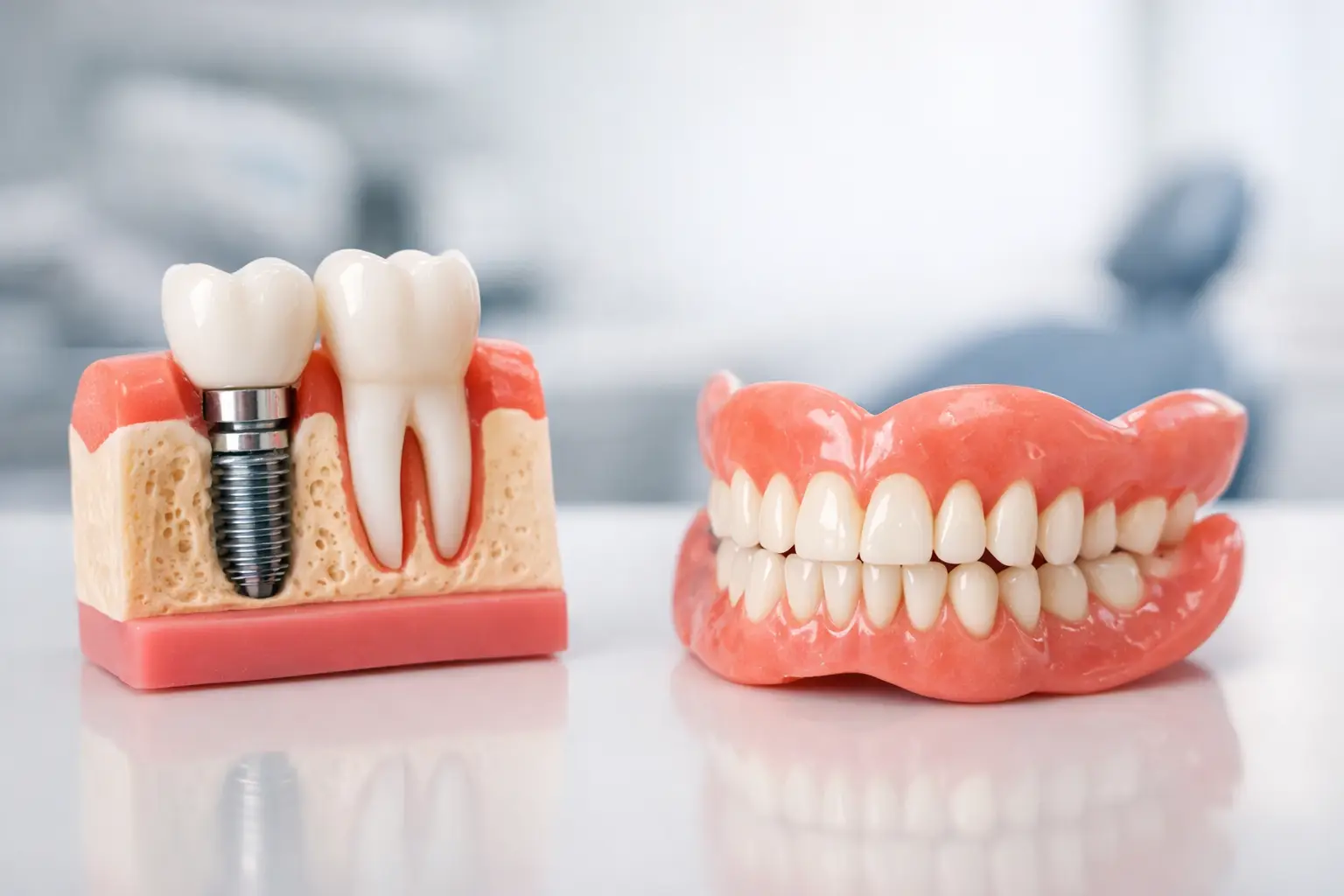
Dentures are removable appliances that replace missing teeth. They can replace a full arch of teeth or just a few missing teeth, depending on the design. Traditional dentures rest on the gums, while some modern dentures can also attach to implants for added stability.
Dental implants are small titanium posts placed in the jawbone to act like artificial tooth roots. Once healed, they support a crown, bridge, or denture. Because implants are anchored in bone, they tend to feel more secure and function more like natural teeth.
That one difference – removable versus anchored – shapes almost every other part of the decision.
How dentures feel in daily life
For some patients, dentures are a practical and effective way to restore a smile without surgery. They can improve appearance quickly and often cost less upfront than implants. If you need to replace many teeth at once, dentures may offer a faster path to a complete smile.
But dentures do require an adjustment period. Lower dentures in particular can shift while talking or chewing, especially if the jawbone has changed over time. Some patients get used to them quickly. Others never fully like the sensation of a removable appliance.
Fit also changes as your mouth changes. After teeth are lost, the jawbone naturally shrinks over time. That can make dentures feel looser, which may mean relines, adjustments, or replacement. Adhesives can help, but many patients prefer not to depend on them long term.
How dental implants feel in daily life
Implants are popular because they are designed to stay put. Patients often describe them as the closest thing to having natural teeth again. You do not remove them at night, and you generally do not worry about slipping when eating or speaking.
That stability can make a real difference in quality of life. Crunchy foods, social events, work meetings, and photos all feel easier when you trust your teeth. For image-conscious adults and busy professionals, that confidence matters just as much as the clinical benefits.
Implants also help stimulate the jawbone, which can reduce the bone loss that happens after a tooth is removed. That support can help preserve facial structure over time, especially when compared with traditional dentures that sit on top of the gums.
The trade-off is that implants require a surgical procedure, healing time, and a higher initial investment. They are not the fastest option, and they are not the best fit for every patient without some planning.
Appearance and confidence
Both dentures and implants can look attractive when designed well. A high-quality denture can restore facial fullness and create a natural-looking smile. For many patients, that change alone is life changing.
Implants usually offer an edge in realism because they emerge from the gums more like natural teeth. They also stay in place, which helps the smile feel more natural during conversation and meals. If your biggest concern is avoiding the look or feel of removable teeth, implants tend to be the stronger choice.
That said, appearance is not just about the teeth. Gum shape, lip support, bite design, and facial proportions all matter. Personalized treatment planning makes the biggest difference, whichever option you choose.
Eating, speaking, and comfort
This is where the gap between dental implants vs dentures becomes very real.
Dentures can restore chewing ability, but they usually do not match the bite strength of natural teeth or implants. Certain foods may still be difficult, especially sticky, hard, or chewy foods. Speech can also take practice at first, since the appliance changes the way the tongue and cheeks move.
Implants generally provide stronger chewing function and greater stability. Most patients find it easier to eat a wider range of foods comfortably. Speech also tends to feel more natural because there is no bulky removable base shifting in the mouth.
Comfort depends on fit and anatomy. A well-made denture can be comfortable, but sore spots and movement are not uncommon. Implants avoid those rubbing points, although the treatment process itself is more involved up front.
Cost now versus value over time
Cost matters, and patients deserve honest conversations about it. Traditional dentures usually cost less at the start, which makes them attractive when budget is the main priority. If you need a tooth replacement solution quickly and want to keep immediate costs down, dentures may make more sense.
Implants cost more because they involve surgery, healing, and custom restoration work. However, they can offer stronger long-term value because they are more stable, often last many years with good care, and help preserve bone.
The lowest upfront price is not always the lowest lifetime cost. Dentures may need adjustments, relines, repairs, and eventual replacement as the mouth changes. Implants can also require maintenance, but they tend to provide more long-term predictability.
This is one of those situations where it depends on your timeline. If you are thinking only about this year, dentures may win. If you are thinking about the next 10 to 20 years, implants may look very different financially.
Who is a good candidate for dentures?
Dentures may be a strong option if you are missing many or all teeth, want to avoid surgery, need a lower initial cost, or need a faster treatment timeline. They can also work well for patients with medical concerns that make implant surgery less ideal.
They are especially useful when a patient wants functional improvement now and may consider other options later. In some cases, dentures can also be part of a phased treatment plan.
Success with dentures often comes down to expectations. Patients who understand the adjustment period and are comfortable with a removable solution tend to do best.
Who is a good candidate for dental implants?
Implants may be a better fit if you want maximum stability, strong chewing function, and a solution that feels more like natural teeth. They are often ideal for patients who are healthy enough for oral surgery and have enough bone support, or are candidates for bone grafting if needed.
They can replace one tooth, several teeth, or support a full arch restoration. That flexibility makes them appealing for adults who want a long-term answer instead of a temporary compromise.
If you have been frustrated by loose dentures in the past, implant-supported treatment may be worth a serious look. Even a few strategically placed implants can dramatically improve denture stability.
Why a personalized exam matters
Online comparisons are helpful, but they cannot tell you the condition of your gums, jawbone, bite, or surrounding teeth. Those details shape what will be comfortable, functional, and durable for you.
A proper evaluation should look at your oral health, bone levels, medical history, cosmetic goals, and budget. It should also include an honest conversation about trade-offs. Good dentistry is not about pushing the most expensive treatment. It is about recommending the option that fits your health and your life.
At a full-service office, patients also benefit from having preventive, restorative, and surgical care coordinated in one place. That can make the process smoother and less stressful, especially when treatment involves extractions, implants, or long-term maintenance.
Dental implants vs dentures: how to decide
If you want the shortest answer, dentures are usually more affordable upfront and faster to complete, while implants usually offer better stability, function, and long-term comfort. Neither option is universally better. The best choice is the one that fits your mouth, your expectations, and your future plans.
If you are still unsure, think about your top priority. Is it keeping initial costs lower? Avoiding surgery? Feeling secure when you eat and talk? Preserving bone and investing in a more permanent solution? Once that priority is clear, the right path often becomes much easier to see.
A confident smile should not feel out of reach or overly complicated. With the right guidance, you can choose a solution that feels comfortable, looks natural, and supports your health for years to come.
Invisalign vs Braces Cost: What to Expect