A camera-ready smile is not the same thing as a healthy, natural-looking smile. The best cosmetic dentistry should improve what you notice in the mirror while still looking believable in conversation, photos, and everyday life. This guide to porcelain veneers explains what veneers can change, what they cannot, and how to decide whether they are the right investment for your smile.
What porcelain veneers are designed to do
Porcelain veneers are thin, custom-crafted shells bonded to the front surfaces of teeth. They are most often placed on visible upper teeth, lower teeth, or both to improve color, shape, proportion, and symmetry. Because porcelain reflects light in a way that resembles natural enamel, well-designed veneers can create a polished result without looking flat or artificial.
Veneers can be an excellent option for teeth that are permanently discolored, mildly chipped, worn, unevenly shaped, or separated by small gaps. They can also help create a more balanced smile when one or several teeth appear shorter, narrower, or slightly rotated.
The key word is slightly. Veneers are cosmetic restorations, not a shortcut around every dental concern. Significant crowding, active gum disease, untreated decay, or a bite that places heavy pressure on the front teeth may need to be addressed first. Sometimes orthodontics, restorative treatment, whitening, or a combination of care will offer a more conservative path.
A guide to porcelain veneers: are you a candidate?
A good candidate has healthy teeth and gums, realistic expectations, and a clear reason for wanting a change. During a personalized consultation, your dentist should evaluate more than the shade of your teeth. Your bite, gumline, enamel, facial features, tooth proportions, and habits all affect whether veneers will be comfortable and durable.
Porcelain veneers may be worth considering if you have discoloration that does not respond well to whitening, such as staining related to certain medications, old dental work, or internal tooth color changes. They may also suit people who want to correct several small cosmetic concerns at once rather than pursuing separate treatments over time.
There are times when another treatment makes more sense. Professional whitening may be enough for healthy teeth with surface staining. Bonding can be a more conservative solution for a small chip or isolated gap, though it may stain or wear sooner than porcelain. Crowns are generally more appropriate when a tooth has substantial damage, a large filling, or needs more structural support than a veneer can provide.
Bruxism, or chronic teeth grinding, does not automatically rule out veneers. It does mean treatment planning must be especially thoughtful. A custom nightguard may be recommended to protect both your veneers and natural teeth from unnecessary pressure.
The treatment process, from consultation to final smile
The veneer process usually takes more than one appointment because customization matters. Rushing the design stage can lead to a result that looks too white, too uniform, or simply unlike you.
Start with a smile evaluation
Your first visit should be a conversation, not a sales pitch. Discuss what you would like to change and what you already like about your smile. Your dentist may take digital images, X-rays when appropriate, and impressions or digital scans to assess your teeth and plan the right proportions.
This is the time to be specific. Bring up concerns about color, tooth length, a gummy appearance, old bonding, or a tooth that photographs darker than the rest. Clear communication gives your dental team a better foundation for designing a smile that fits your goals.
Preparing the teeth
Traditional porcelain veneers often require a small amount of enamel to be reshaped so the veneer sits naturally against the tooth and does not look bulky. The amount varies depending on the tooth position, desired shape, and existing enamel. Local anesthetic can be used to keep this appointment comfortable.
Minimal-prep or no-prep veneers may be possible in selected cases, but they are not automatically better. If a veneer is placed over a tooth without enough space, it can appear thick or affect the bite. The healthiest option is the one that achieves a natural fit while preserving as much tooth structure as practical.
After preparation, your dentist takes detailed impressions or digital scans. Temporary veneers may be placed while the final restorations are crafted, especially when multiple teeth are being treated.
Try-in and bonding
Before final bonding, your dentist evaluates the veneers for fit, color, shape, and overall harmony. Small adjustments can be made before they are permanently placed. Once you and your dentist are satisfied, the veneers are bonded with a specialized dental adhesive.
Your bite is checked carefully after placement. A new smile should feel good when you speak, bite, and close your teeth together. Follow-up care is part of the process, not an afterthought.
Choosing a shade that still looks like you
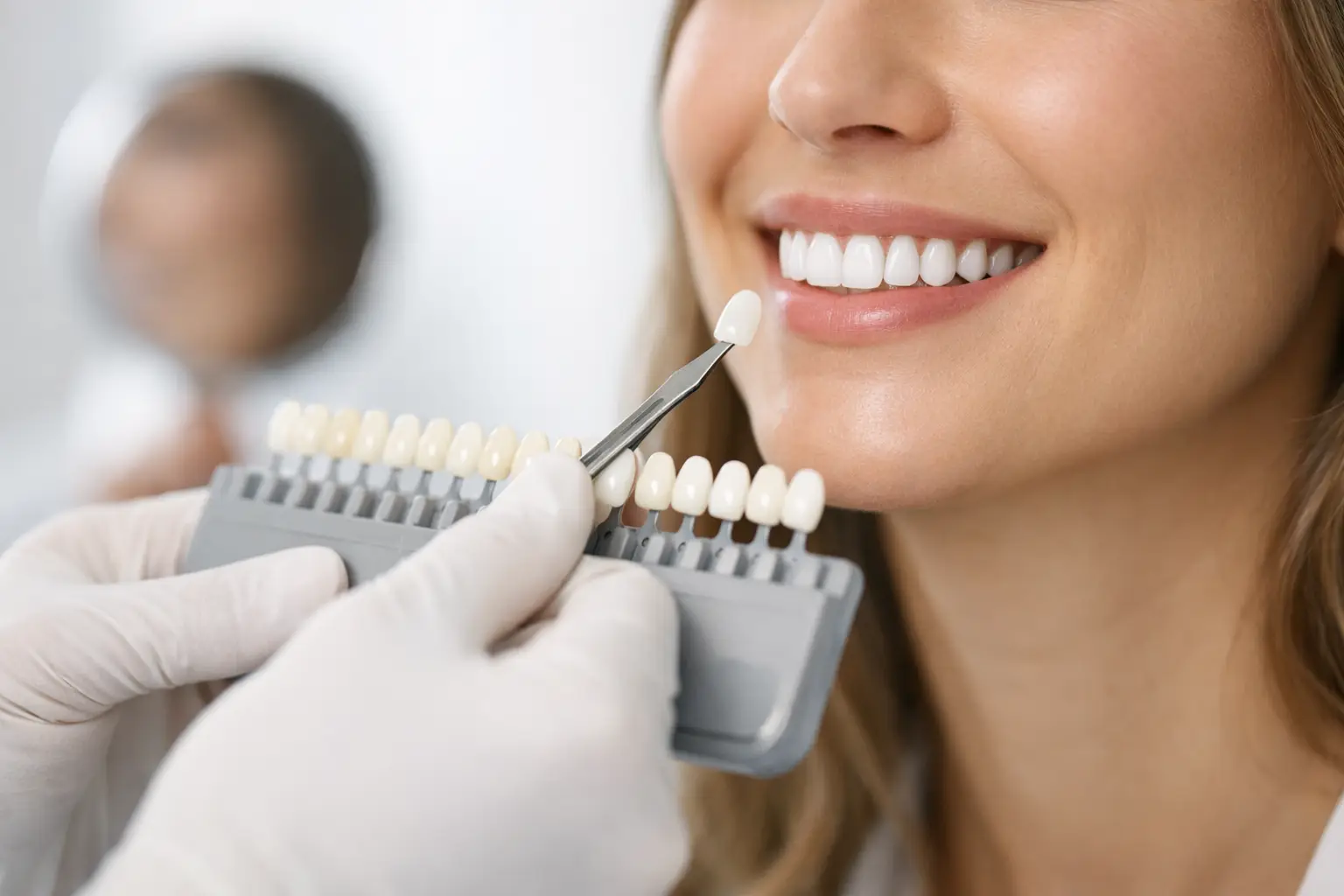
Many patients arrive asking for the whitest possible shade. Bright can be beautiful, but an extremely white shade may not complement your complexion, lips, or the teeth that will remain untreated. Natural teeth also have subtle translucency and variation. A skilled veneer design accounts for these details.
If you are whitening any natural teeth, do it before your veneers are made. Porcelain does not respond to whitening products after placement, so the final shade should be selected with your surrounding teeth in mind. Your dentist can help you find a color that looks fresh without making the result feel disconnected from the rest of your smile.
What veneers cost and why estimates vary
Porcelain veneers are a custom cosmetic treatment, so cost depends on the number of teeth treated, the complexity of your case, the materials used, and whether other dental work is needed first. A single veneer to repair one visible tooth is very different from a broader smile makeover that changes multiple teeth and addresses gum contours or bite concerns.
Dental insurance often does not cover veneers when they are primarily cosmetic. It is still worthwhile to ask for a clear treatment plan that separates recommended health care from elective cosmetic treatment. A trustworthy office will discuss pricing, payment options, and the scope of care before you commit.
Be cautious about choosing solely on the lowest price. Veneers involve irreversible changes to tooth enamel in many cases, and the quality of planning, laboratory craftsmanship, fit, and bonding can affect both appearance and longevity.
Caring for porcelain veneers every day
Porcelain is stain resistant, but it is not indestructible. Veneers need the same consistent care as natural teeth: brush twice daily with a nonabrasive toothpaste, floss daily, and maintain regular dental exams and cleanings. Healthy gums are essential to a beautiful veneer result because the gums frame every tooth.
Avoid using your teeth as tools to open packages or hold objects. Be mindful with very hard foods, and wear a protective guard if you grind your teeth or play contact sports. Coffee, tea, and red wine will not typically stain porcelain itself, but they can affect natural teeth and may contribute to discoloration around the edges over time.
Veneers can last many years with attentive care, but they may eventually need replacement due to normal wear, chipping, gumline changes, or changes in the underlying tooth. They are a long-term commitment, not a temporary cosmetic filter.
Questions worth asking before you proceed
Before choosing veneers, ask how many teeth should be treated to create a balanced result and whether a wax-up, mock-up, or digital preview is available. Ask how much enamel may need to be removed, what happens if a veneer chips or comes loose, and whether a nightguard is recommended for your bite.
It also helps to ask what alternatives could meet your goals. A dentist who can provide preventive, restorative, and cosmetic care in one office can look at the full picture instead of treating veneers as the answer to every concern.
For patients in West Hollywood and the greater Los Angeles area, West Hollywood Smile Dental can help you explore porcelain veneers with a comfort-first, personalized approach. The right decision begins with an honest exam, a clear plan, and a smile design that still feels unmistakably yours.
Is a Same Day Dental Crown Right for You?