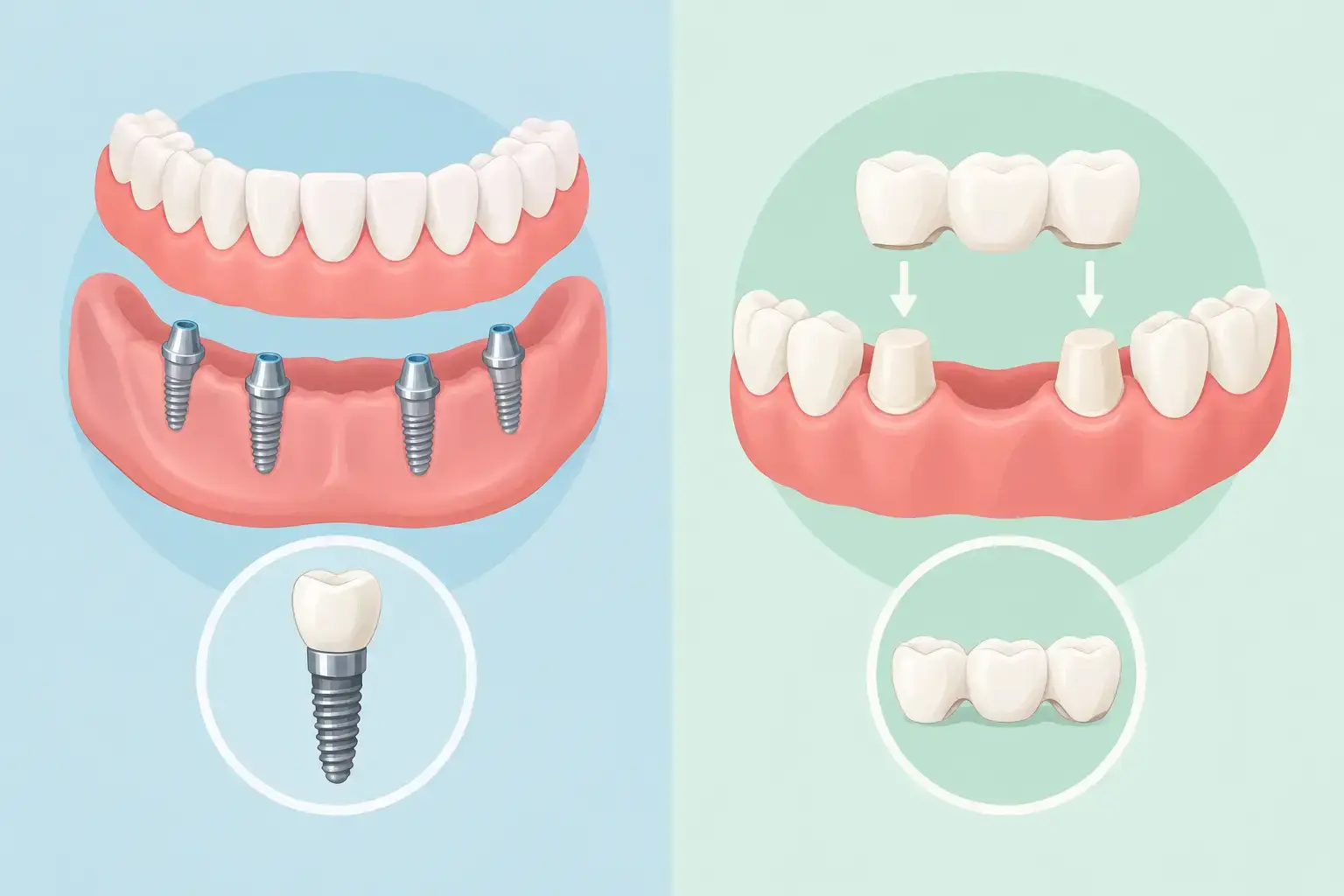
A single missing tooth and a full arch of missing teeth create very different decisions. That is why the question of implant supported dentures versus bridges needs a little clarification before any treatment choice is made. A bridge is often used to replace one tooth or several teeth in a row. Implant-supported dentures are generally designed for people missing most or all teeth in an upper or lower arch.
Both can restore the ability to chew, speak, and smile with more confidence. The better option depends on how many teeth are missing, the health of your remaining teeth and gums, the amount of jawbone available, and what feels manageable for your daily life. A thoughtful consultation should make room for all of those factors, without pressure.
First, understand what each option replaces
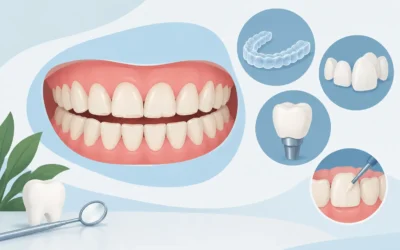
A traditional dental bridge fills a gap between natural teeth. The teeth on either side of the space are prepared to support connected replacement teeth, called pontics. This can be a practical solution when neighboring teeth already need crowns or are strong enough to support the bridge.
An implant-supported bridge also replaces one or more missing teeth, but it is held by dental implants placed in the jaw rather than by adjacent natural teeth. Depending on the situation, it may be fixed in place and only removed by a dental professional.
Implant-supported dentures replace a larger number of teeth, often a full upper or lower arch. The denture connects to implants for added retention and support. Some designs are removable by the patient for cleaning, while others are fixed and professionally removable. The American Dental Association explains that dental implants can support replacement teeth, bridges, or dentures, so the word “implant” alone does not describe one single treatment.
Implant supported dentures versus bridges: the central difference
The main distinction is the scope of tooth loss. If you are missing one tooth, or a few neighboring teeth, a bridge may be the more relevant comparison. If you are missing all or nearly all teeth in an arch, implant-supported dentures are usually the more relevant category.
This distinction matters because a bridge cannot simply be treated as a smaller denture, and a full-arch denture is not usually a substitute for replacing one missing tooth. The forces of chewing, the number and location of supporting teeth or implants, and the condition of the jaw all change the treatment plan.
There can be overlap. A person missing several teeth in different areas may need a different approach from someone with one continuous gap. Someone who still has a few natural teeth may also need to consider whether those teeth can be predictably maintained before choosing a partial denture, bridge, or implant-based treatment.
How stability and comfort can differ
A conventional bridge is fixed, so it generally stays in place during daily activities. It can feel familiar because it does not cover as much gum tissue as a removable denture. However, it depends on the health of the supporting teeth. If decay, gum disease, or damage affects one supporting tooth, the entire bridge may be affected.
Implant-supported dentures are designed to reduce the movement that some people experience with conventional dentures. Improved retention can make eating and speaking feel more secure for many patients. Still, the sensation is not identical to having natural teeth. The denture base, bite design, and implant position all influence comfort and function.
A fixed implant-supported bridge can offer a stable replacement for several missing teeth without relying on the teeth beside the gap. Yet it requires adequate bone, healthy tissues, and careful planning. No option is automatically more comfortable for every person. A well-designed restoration that matches your oral condition is more meaningful than choosing based on a label alone.
The effect on neighboring teeth and jawbone
One reason people ask about implants is that they can avoid preparing neighboring teeth for a traditional bridge. With a conventional bridge, the adjacent teeth are reshaped to receive crowns. If those teeth are already heavily filled, cracked, or crowned, that may be a reasonable trade-off. If they are healthy and untouched, preserving them may carry more weight in the decision.
Implants also transmit chewing forces into the jawbone. When a tooth is lost, the bone in that area can gradually change over time because it no longer receives the same stimulation. The National Institute of Dental and Craniofacial Research notes that bone loss can occur after tooth loss. Implants may help preserve bone in the area where they are placed, but they do not eliminate every type of bone or gum change, especially across a full arch.
Bone quantity and quality must be evaluated individually. Some patients may need additional treatment before implants can be considered, while others may not be good candidates for implants at all. A clinician may use an exam and imaging to assess this rather than making assumptions based on appearance alone.
Daily cleaning and long-term maintenance
Every replacement option needs regular care. With a traditional bridge, cleaning beneath the false tooth is essential because plaque can collect where the bridge meets the gumline. Specialized flossing tools may be recommended to clean under the connected teeth.
Implants cannot develop cavities, but the surrounding gums and bone still need protection. Inflammation around implants can threaten their long-term health. This is why consistent home cleaning and professional examinations matter for both implant-supported bridges and implant-supported dentures.
Removable implant-supported dentures have components that must be cleaned carefully. Fixed restorations also need access around and beneath the prosthetic teeth. Before deciding, ask the dentist to show you how each option would be cleaned. The most sophisticated treatment is not necessarily the best fit if its care routine does not feel realistic for you.
Cost is more than the restoration itself
It is understandable to compare costs early. A conventional bridge may have a lower upfront cost than an implant-based option because implants involve surgical placement, healing time, and separate restorative components. Implant-supported dentures may involve several implants, a custom denture, attachment systems, and additional planning.
But the initial fee is only one part of value. A bridge supported by natural teeth may eventually need replacement if a supporting tooth changes. Implant restorations may need maintenance or component replacement over time. The complexity of your case, the materials selected, the condition of remaining teeth, and whether additional procedures are needed can all affect the overall estimate.
Ask for a written treatment plan that explains what is included and what future maintenance may be anticipated. A clear financial conversation is part of informed care, not an uncomfortable extra question.
Questions worth bringing to your consultation
A useful consultation is not just about hearing a recommendation. It is also an opportunity to understand why that recommendation fits your mouth. Consider asking:
- Am I replacing one tooth, several teeth, or a full arch, and which options are clinically appropriate for that amount of tooth loss?
- Are the teeth next to my gap healthy enough to support a traditional bridge?
- Is there enough healthy bone and gum support for implants?
- Would my restoration be removable or fixed, and how would I clean it?
- What are the likely limitations, maintenance needs, and alternatives in my specific case?
Your medical history also matters. Certain health conditions, medications, tobacco use, active gum disease, and teeth grinding can influence timing or suitability. These factors do not always rule out treatment, but they deserve an honest conversation.
A decision should feel informed, not rushed
Choosing between implant-supported dentures and bridges is not a test of whether you have chosen the “best” technology. It is a decision about restoring function in a way that respects your health, goals, budget, and comfort with care. For patients in West Hollywood and nearby communities, West Hollywood Smile Dental can use an in-person evaluation to discuss the options that may be appropriate for your specific needs.
Bring your questions, including the practical ones about cleaning, appointments, appearance, and what happens if your needs change. The right next step is a treatment conversation that leaves you feeling heard and clear about your choices.