A great smile makeover should never begin with choosing the whitest shade on a chart. It should begin with a conversation about what you notice when you look in the mirror, what feels out of proportion, and what you want your smile to say about you. A Beverly Hills veneers consultation gives you the space to have that conversation with a dentist who can balance cosmetic goals with the health and function of your teeth.
Veneers can create a meaningful change in a relatively short amount of time, but they are also a long-term decision. The consultation is where you learn whether veneers are the right treatment, what a natural-looking result may involve, and how the process can be tailored around your comfort, schedule, and budget.
Your Beverly Hills Veneers Consultation Starts With Your Goals
No two patients want the same result. One person may want to soften a noticeable gap between front teeth. Another may be bothered by chips, uneven edges, stubborn discoloration, or teeth that look smaller than they used to. Some patients want a subtle refresh that friends cannot quite identify, while others are ready for a brighter, more dramatic transformation.
Your dentist should ask what you like and dislike about your current smile before recommending a treatment. Photos of smiles you admire can be useful, but they are only a starting point. The shape of your face, lip line, tooth proportions, skin tone, and natural expression all affect what will look right on you.
This is also the time to be candid about practical concerns. If you have a wedding, presentation, reunion, or other important event ahead, your treatment timeline matters. If you are nervous about dental visits, say so. A patient-centered office can explain comfort options and build a plan that feels manageable rather than rushed.
A Complete Exam Protects the Result You Want
Veneers are cosmetic restorations, but the foundation underneath them needs to be healthy. During your visit, the dental team will evaluate your teeth, gums, bite, and existing dental work. Depending on your needs, this may include digital imaging, photographs, or impressions or scans that help the dentist study your smile from every angle.
This step can reveal issues that are easy to miss on your own. Gum inflammation, untreated decay, old fillings, cracks, grinding, or an uneven bite can all affect the appearance and lifespan of veneers. Addressing those concerns first is not a detour from your cosmetic goal. It is how your new smile gets the support it needs.
For example, a patient with significant nighttime grinding may need a custom night guard after veneers are placed. Someone with crowded teeth may get a more conservative and balanced result by considering orthodontic treatment or clear aligners first. The best recommendation is not always the fastest one. It is the one that protects your oral health while serving your aesthetic goals.
What Your Dentist Looks For
Your dentist will consider whether your enamel is strong enough to support veneers and how much tooth preparation may be needed. Porcelain veneers typically require some adjustment to the front surface of the tooth, although the amount varies by case. A conservative approach is often preferred when it can still deliver the desired result.
Your bite is equally important. Front teeth are involved in speaking, biting, and guiding jaw movement. If veneers are designed without accounting for how your teeth come together, they may be more vulnerable to chipping or discomfort. Thoughtful planning helps create a smile that looks polished and feels natural when you talk and eat.
Talking Through Veneer Options and Alternatives
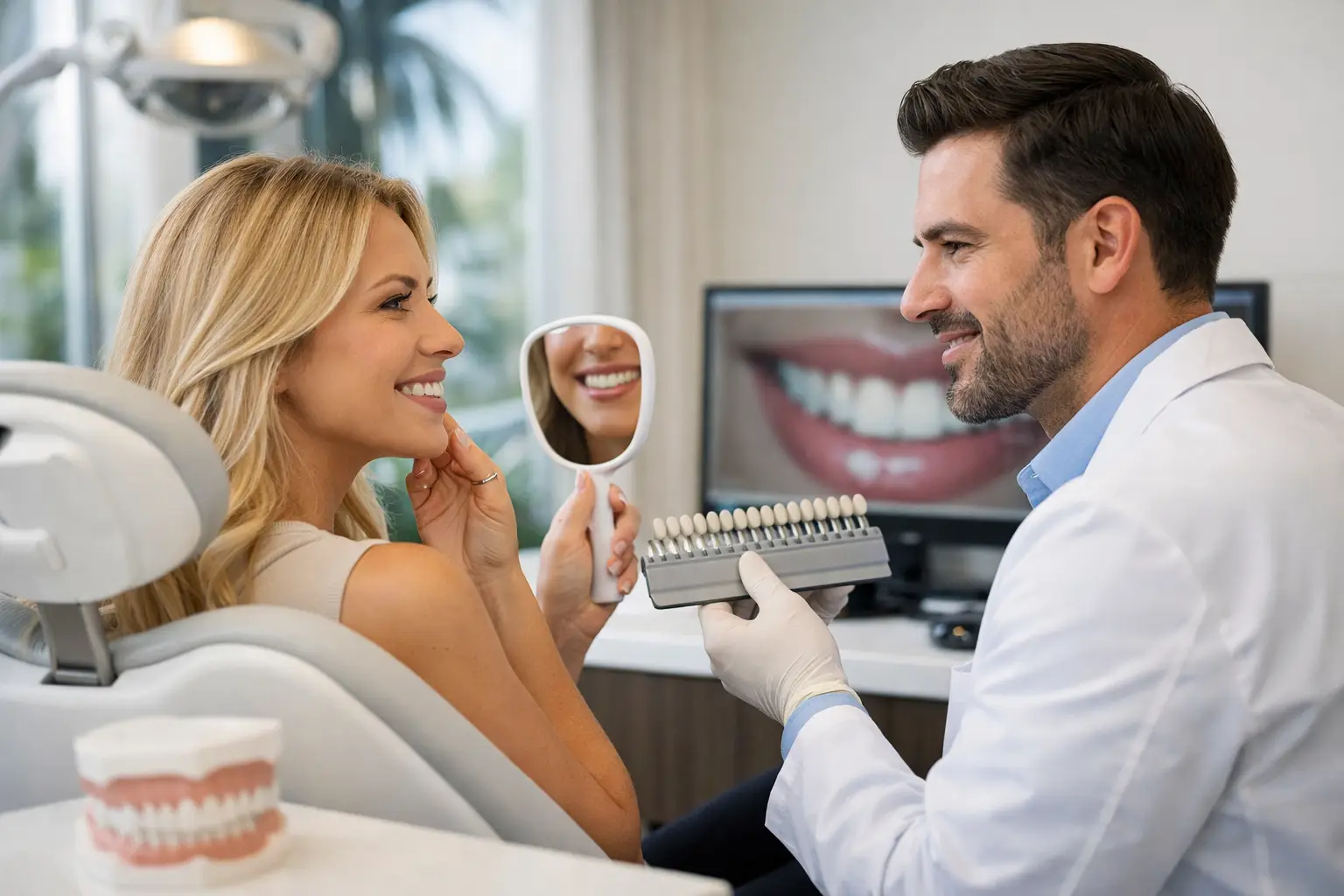
Most patients considering veneers are looking for a durable, stain-resistant cosmetic option. Porcelain veneers are custom-made shells that cover the visible front surface of teeth. They can improve color, shape, size, symmetry, and minor spacing concerns in a single treatment plan.
Still, veneers are not automatically the right answer for every concern. Professional whitening may be enough if the main issue is discoloration. Dental bonding can be a more conservative option for small chips or minor reshaping, though it may stain or wear sooner than porcelain. Crowding or spacing may respond best to orthodontics. Crowns may be recommended instead when a tooth has extensive damage or needs greater structural coverage.
A trustworthy consultation includes these alternatives. You deserve to understand the trade-offs, including durability, maintenance, cost, and how each option affects your natural tooth structure. Cosmetic dentistry works best when there is no pressure to choose a treatment that does more than you need.
Designing a Smile That Still Looks Like You
The most successful veneers do not look identical on every patient. They look intentional, balanced, and appropriate for the person wearing them. During the planning process, you may discuss tooth length, edge shape, brightness, translucency, and whether you want a more youthful or more natural character in the final design.
Very white veneers can look beautiful for some patients, but a shade that is too bright compared with surrounding teeth, skin tone, or existing restorations can feel artificial. Likewise, perfectly uniform teeth are not always the goal. Small details in shape and texture can help porcelain reflect light more naturally.
If you are treating only a few teeth, color matching becomes especially important. If you are restoring a broader smile zone, you have more flexibility in selecting a new shade and overall look. Your dentist can help you see the difference between what photographs well under bright lighting and what remains flattering in everyday life.
Questions Worth Asking During Your Visit
You do not need to know dental terminology to have a productive consultation. Ask how many teeth are likely to be included, whether your plan requires tooth preparation, and what temporary veneers may feel like if they are part of your treatment. It is also reasonable to ask what happens if a veneer chips, how to care for it, and how your bite will be checked after placement.
Ask to see examples of work with goals similar to yours when available. More importantly, ask why a particular plan is being recommended. Clear answers help you feel confident that the treatment is personalized rather than based on a one-size-fits-all cosmetic formula.
Understanding the Veneer Timeline
The treatment schedule depends on the complexity of your case and whether any preparatory care is needed. Once your plan is finalized, the dentist prepares the teeth as conservatively as appropriate, records detailed impressions or digital scans, and sends the specifications to a dental laboratory. Temporary veneers may be placed while your custom porcelain veneers are being created.
At the final appointment, each veneer is tried in before being bonded permanently. This allows the dentist to evaluate fit, color, shape, and how the veneers look with your lips and smile. Small adjustments may be made before the final placement. The goal is not simply to place restorations quickly. It is to make sure you can smile, speak, and bite comfortably.
Afterward, porcelain veneers should be cared for much like natural teeth: brush twice daily, floss carefully, keep up with professional cleanings, and avoid using teeth to open packages or bite hard objects. If you clench or grind, wearing a protective night guard can be an important part of maintaining your investment.
Planning for Cost Without Guesswork
The cost of veneers varies based on the number of teeth involved, the materials used, the complexity of your bite, and any care needed before treatment. Because veneers are primarily cosmetic, dental insurance often does not cover them. A consultation is the right time to receive a clear, personalized estimate and discuss available payment or membership options.
Price matters, but it should not be the only deciding factor. Veneers are custom dental work that affect your appearance and daily function. Careful diagnosis, high-quality materials, precise laboratory work, and attentive follow-up all contribute to a result that feels worth choosing.
At West Hollywood Smile Dental, a veneers consultation is designed to feel informative, comfortable, and personal. You should leave knowing what your options are, what your next steps could look like, and whether veneers truly fit your smile goals. The right plan is one that lets you feel more like yourself every time you smile.
What Does Deep Cleaning Do for Teeth and Gums?