
Veneers vs Teeth Whitening: Which Fits?
A lot of patients ask the same question after looking in the mirror or scrolling through photos of their smile: should I brighten what I have, or change the look of the teeth themselves? When it comes to veneers vs teeth whitening, the right answer depends on why your teeth look the way they do, how dramatic a change you want, and how long you want the result to last.
Both treatments can improve your smile, but they solve different problems. Whitening is designed to lift stains from natural teeth. Veneers change the visible front surface of the tooth, which means they can improve color, shape, size, and even minor alignment concerns at the same time. That is why one option can feel like a quick refresh, while the other is closer to a full cosmetic upgrade.
Veneers vs teeth whitening: the real difference
Teeth whitening works by using bleaching agents to break up stain molecules in enamel and dentin. It is most effective on yellowing or darkening caused by coffee, tea, red wine, tobacco, and the natural aging process. If your teeth are healthy and you mostly want them to look cleaner and brighter, whitening is often the more conservative place to start.
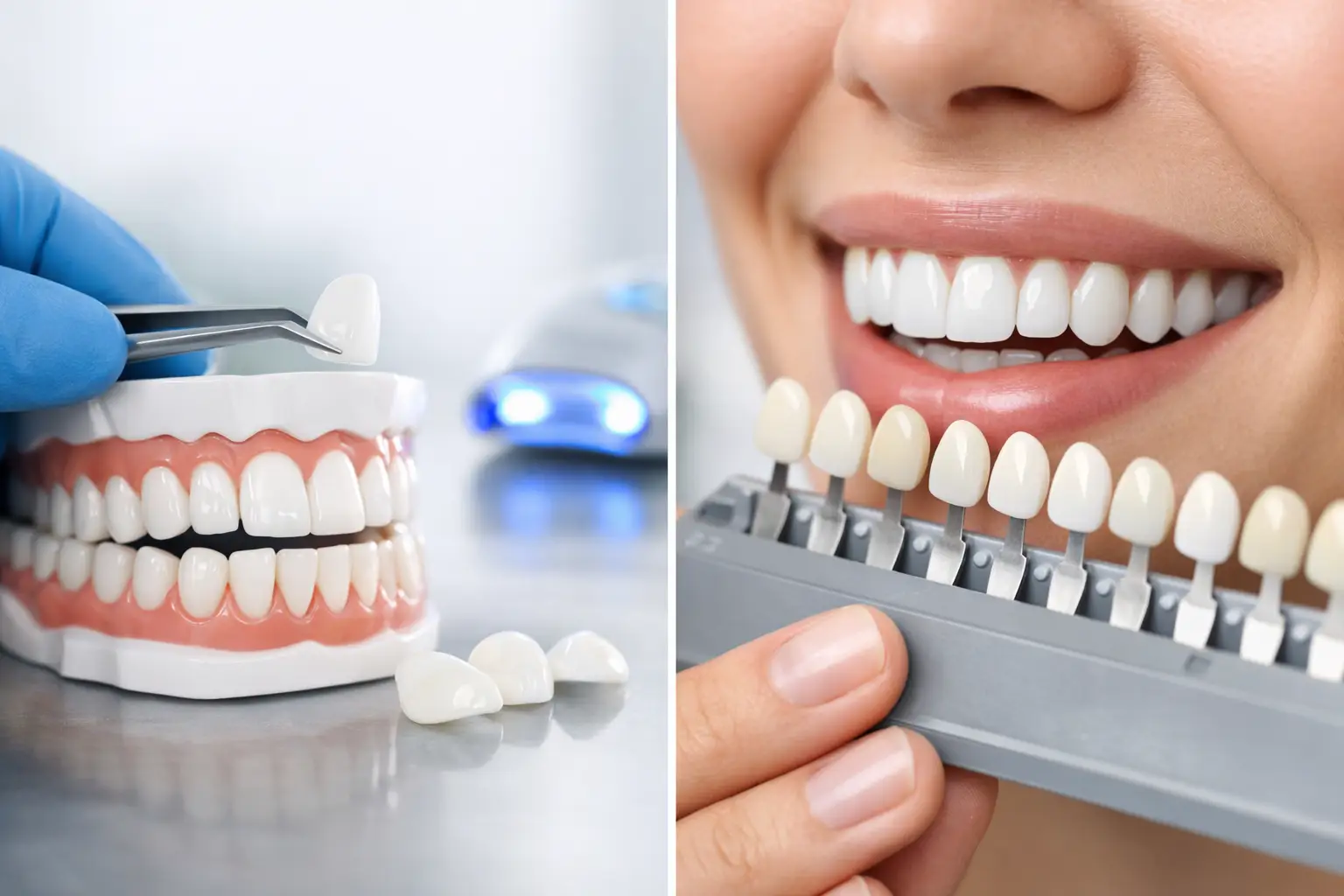
Veneers are thin custom shells, usually made from porcelain, that are bonded to the front of the teeth. Because they cover the visible surface, they do more than change color. They can also improve chips, worn edges, uneven spacing, irregular shape, and teeth that appear slightly crooked. For patients who want a more polished and uniform smile, veneers can deliver a result that whitening simply cannot.
That difference matters. If your concern is only shade, whitening may be enough. If your concern includes color plus shape or symmetry, veneers may be the better fit.
When teeth whitening makes the most sense
Whitening is often the best choice for patients who like their natural teeth and just want them to look brighter. It is simpler, more affordable than veneers, and does not require changing the structure of the tooth in the way veneers typically do.
This option works especially well when discoloration is external or age-related. Many adults in Los Angeles notice that years of coffee, matcha, wine, or simply a busy routine can leave teeth looking dull even when they are healthy. Professional whitening can noticeably improve that without changing the natural character of your smile.
Whitening can also be a smart first step if you are still deciding how much cosmetic dentistry you want. Some patients come in thinking they need a major change, then realize brighter teeth already make them feel much more confident. Others whiten first and later choose veneers on a few teeth that still stand out.
There are limits, though. Whitening does not fix chips, cracks, uneven edges, gaps, or misshapen teeth. It also does not work the same way on crowns, bonding, or veneers you already have. And some deep intrinsic stains, including certain medication-related discoloration or developmental staining, may not respond well enough to bleaching.
When veneers are the better investment
Veneers tend to make more sense when your goals go beyond brightness. If one tooth is darker than the others, if the front teeth are worn down, or if the smile looks uneven in photos, veneers can address several concerns in one treatment plan.
This is often why veneers appeal to image-conscious adults who want a more camera-ready smile. They offer a high level of control over the final look. Shade, length, width, contour, and overall balance can all be customized. That level of design is very different from whitening, where the result depends on how your natural enamel responds.
Veneers can also be useful when stains are resistant to whitening. Some discoloration sits so deep within the tooth that even strong professional whitening cannot create the result a patient wants. In those situations, veneers may provide a more predictable outcome.
Still, veneers are not automatically the better cosmetic treatment just because they do more. They involve a bigger commitment, a higher cost, and careful planning. If your teeth are healthy, well-shaped, and only a little dull, veneers may be more treatment than you actually need.
Cost, longevity, and maintenance
For many patients, the practical side of veneers vs teeth whitening matters just as much as appearance.
Whitening usually costs less upfront. Whether done in-office or with professional take-home trays, it is one of the most accessible cosmetic dental treatments. The trade-off is that it is not permanent. Results can last months to a few years depending on your habits, enamel, and maintenance. If you drink staining beverages often or smoke, touch-ups may be needed sooner.
Veneers cost more because they are custom restorations that require design, fabrication, and precise placement. However, they also last much longer than whitening when cared for properly. Porcelain veneers can remain beautiful for many years, though they are not considered lifetime restorations. At some point, replacement may be needed.
Maintenance is different too. Whitened teeth still need ongoing stain prevention and occasional retreatment. Veneers do not whiten after placement, so their shade stays stable, but the surrounding natural teeth can still darken over time. That is one reason treatment planning matters. If veneers are being placed on only a few teeth, the overall color balance of the smile should be considered from the beginning.
Which option looks more natural?
Both can look natural when done well. Whitening tends to preserve the most natural appearance because it is your actual tooth color, just brighter. For patients who want a fresher version of their own smile, that can be a major advantage.
Veneers can also look extremely natural, but the result depends on thoughtful design. The best veneers do not look flat, bulky, or overly white. They complement your face, gumline, and bite. A personalized approach matters here because the goal is not to give every patient the same smile. It is to create a smile that looks healthy, balanced, and believable on that person.
This is one reason many patients value being treated in a practice that offers comprehensive cosmetic and restorative care in one place. A dentist who understands both aesthetics and long-term oral health is better positioned to recommend the option that truly fits, rather than the one that sounds more dramatic.
How dentists decide between veneers vs teeth whitening
A good cosmetic consultation is not just about asking what shade you want. It starts with the health of the teeth and gums. If there is decay, gum disease, enamel damage, grinding, or bite instability, those issues should be addressed before cosmetic work moves forward.
Then the discussion turns to goals. Are you mainly bothered by yellowing? Do you dislike the size or shape of your front teeth? Is there one tooth that never matches the others? Are you looking for a subtle improvement or a more complete smile makeover?
Photos, an exam, and sometimes digital imaging can help clarify what each treatment can realistically achieve. In many cases, the answer is not strictly one or the other. Some patients benefit from whitening the full smile and placing veneers only on a few visible teeth. That kind of blended approach can preserve more natural tooth structure while still delivering a very refined result.
At West Hollywood Smile Dental, that personalized planning matters because comfort, clarity, and long-term trust matter. Patients deserve honest guidance, not pressure.
Questions to ask before choosing
If you are deciding between these treatments, it helps to ask yourself a few practical questions. Do you want a quick brightness boost, or are you hoping to redesign the look of your smile? Are your concerns mostly about stain, or do shape and symmetry bother you too? Is your budget better suited for a simpler treatment now, or are you ready to invest in a longer-lasting cosmetic change?
It also helps to think about lifestyle. If you want low commitment and are comfortable with maintenance, whitening can be a great choice. If you want a more controlled, polished transformation and understand the commitment involved, veneers may feel more worthwhile.
Neither option is universally better. The better option is the one that matches your teeth, your goals, and your comfort level with treatment.
A brighter smile should feel like you, just more confident. The best place to start is with a thoughtful exam and a conversation about what you really want to change, because the right cosmetic treatment is not the most expensive one or the fastest one. It is the one that helps you feel comfortable every time you smile.

How to Find the Best Dentist for Smile Makeover