
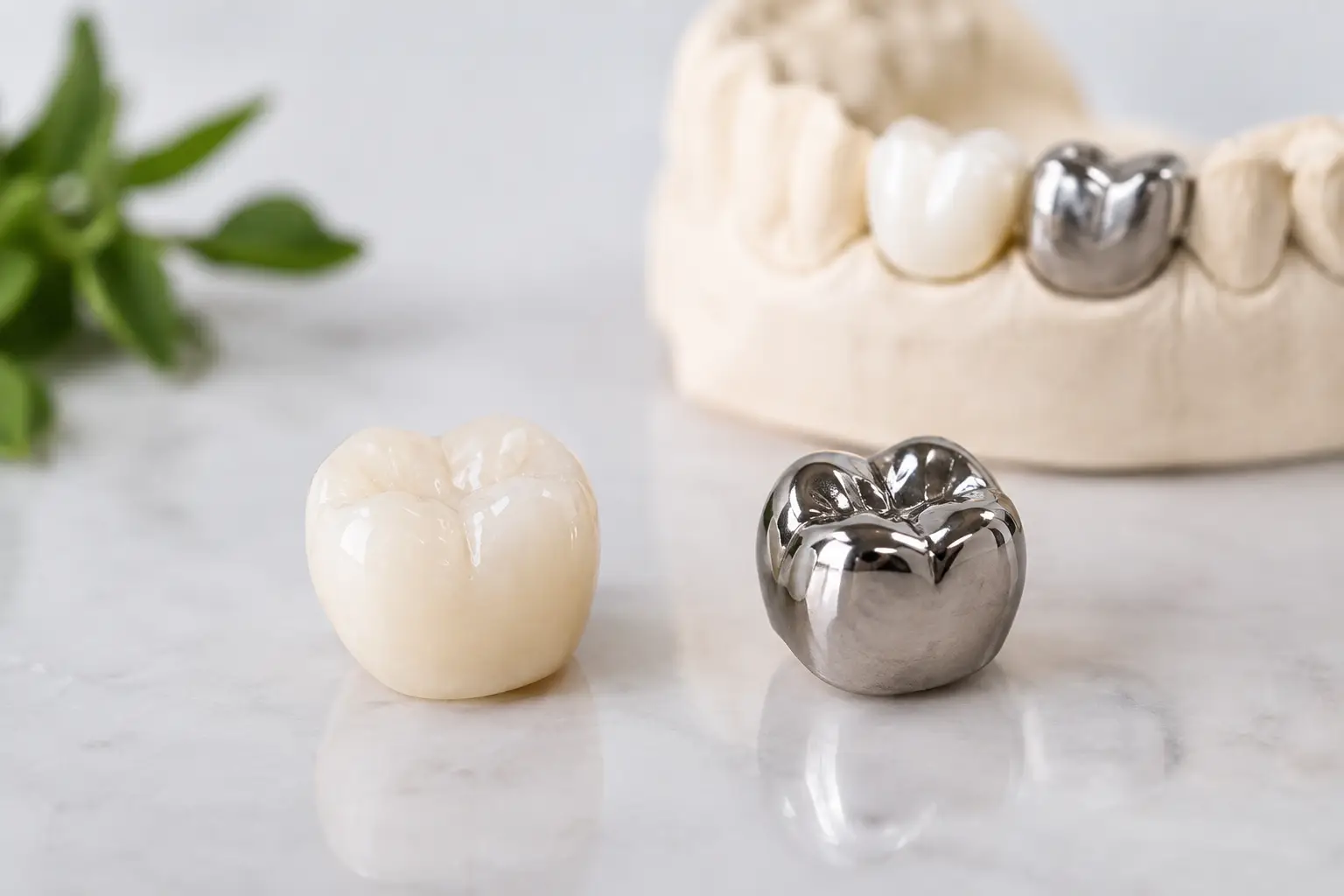
A crown has one job that matters every time you bite, speak, or smile: protect a damaged tooth without making your life harder. When considering ceramic versus metal dental crowns, the better choice is rarely about one material being universally superior. It is about where the tooth sits, how hard you bite, how much healthy tooth structure remains, and how natural you want the restoration to look.
For many patients, especially those restoring a visible front tooth, appearance is a major deciding factor. For a back molar that handles years of chewing pressure, strength may come first. A personalized exam helps balance both goals, so you can feel confident in your crown rather than second-guessing the material.
Ceramic Versus Metal Dental Crowns: The Main Difference
Ceramic crowns are tooth-colored restorations made from materials such as porcelain, lithium disilicate, or zirconia. They are designed to blend with the shade, shape, and light-reflecting qualities of natural enamel. Modern ceramics can be remarkably strong, but the ideal type of ceramic depends on the tooth being treated.
Metal crowns may be made from gold alloy, other metal alloys, or a combination of metal and porcelain. Full-metal crowns have a long clinical history because they are durable and can withstand significant bite force. Porcelain-fused-to-metal crowns place tooth-colored porcelain over a metal foundation, offering a middle ground between strength and appearance.
The material is only one part of a successful result. The fit of the crown, the health of the gum tissue, the condition of the tooth underneath, and your daily oral hygiene all influence how long a restoration lasts.
When Ceramic Crowns Make Sense
Ceramic is often the preferred option for teeth that show when you smile. A well-designed ceramic crown can be customized to match neighboring teeth closely, including subtle differences in translucency and color. This makes it a popular choice for front teeth, premolars, and visible areas of the smile.
Ceramic also avoids the dark edge that can sometimes become noticeable near the gumline with porcelain-fused-to-metal crowns. If gums recede over time, a metal margin may show as a grayish line. An all-ceramic crown does not have that same underlying metal color.
Not all ceramic crowns perform the same way. Lithium disilicate is valued for lifelike esthetics and is often appropriate for front teeth and certain premolars. Zirconia is stronger and can be an excellent option for molars or patients with heavier bite forces. Some newer layered zirconia materials provide a more natural appearance while maintaining impressive durability.
There are trade-offs. Ceramic can wear or chip under certain conditions, particularly when a patient clenches or grinds their teeth. A nightguard may be recommended to protect a crown and the natural teeth around it. Ceramic may also require slightly more room than a full-metal crown, which can affect how much tooth preparation is needed in some cases.
When Metal Crowns May Be the Better Choice
A full-metal crown remains one of the most durable restorative choices available. Metal tolerates heavy chewing forces well and is less likely to fracture than porcelain. Because metal is strong even when made relatively thin, it can sometimes preserve more of the natural tooth during preparation.
That strength makes metal especially useful for molars that are largely hidden from view, particularly in patients who grind their teeth or have a powerful bite. Gold-colored alloy is the most recognizable example, although other metal alloys are also used. The obvious limitation is appearance. Most people do not want a visible metal crown on a front tooth, even if it would function well.
Porcelain-fused-to-metal crowns can be appropriate when a tooth needs the support of a metal substructure but also benefits from a tooth-colored outer surface. They have been used successfully for many years. However, porcelain can chip away from the metal beneath it, and the metal may become more visible if gum tissue changes over time.
Strength Is About More Than the Crown Material
Patients often ask which crown lasts longer. The honest answer is that longevity depends on several connected factors. A crown can fail because of decay at its edge, gum disease, a cracked tooth root, cement breakdown, trauma, or grinding, even if the crown material itself is still intact.
Your dentist will look at the amount of remaining tooth structure, whether the tooth has had root canal treatment, your bite alignment, and signs of clenching or grinding. A molar with a large filling and a strong bite may need a different approach than a front tooth with a small fracture. If you have a history of breaking dental work, a stronger zirconia or metal option may be worth considering.
A crown should also be designed to work with the teeth that oppose it. Very hard ceramic materials can be excellent choices, but the crown must be carefully shaped and polished to minimize unnecessary wear on the opposing tooth.
Appearance, Comfort, and Sensitivity
For patients who care deeply about a natural-looking smile, ceramic usually has the advantage. It can be matched to surrounding teeth more precisely than a full-metal crown, and it reflects light in a way that can feel more natural in visible areas.
Comfort should not be overlooked. A properly fitted crown, whether ceramic or metal, should feel like part of your bite rather than an obstacle. It may take a few days to adjust to the shape of a new restoration, but persistent pain, pressure, or a bite that feels high should be checked promptly.
Some people have sensitivities to certain metal alloys. While this is not common, it is relevant when selecting a crown. Let your dental team know about any known metal allergies or previous reactions. All-ceramic options may be especially appealing in these situations.
Cost and Insurance Considerations
Crown costs vary based on the material selected, the location of the tooth, laboratory work, and whether additional treatment is needed before the crown can be placed. For example, a tooth that requires a root canal, buildup, or gum treatment will involve more than the crown alone.
Insurance plans often contribute toward crowns when they are medically necessary, but the covered amount and material allowance can differ substantially. Some plans cover a basic crown amount while leaving patients responsible for the difference if they select a higher-esthetic material. Before treatment begins, ask for a clear explanation of expected fees, insurance estimates, and available payment options.
The least expensive choice is not always the best long-term value. A crown that suits your bite, protects the tooth effectively, and meets your appearance goals can prevent frustration and repeat treatment later.
How Your Dentist Helps You Choose
The right crown starts with a careful diagnosis, not a quick material preference. Your dentist will examine the tooth, take digital images or X-rays as needed, assess your gum health, and evaluate how your teeth meet when you close your mouth. The conversation should include what you value most: a highly natural appearance, maximum durability, preserving tooth structure, budget, or a balance of all four.
At West Hollywood Smile Dental, crown recommendations are made with your comfort, function, and long-term oral health in mind. Whether you need to restore a cracked molar, replace an older crown, or rebuild a tooth after root canal treatment, you deserve clear answers and gentle, personalized care.
A crown is a daily-use restoration, not simply a cosmetic decision. Bring questions about your bite, esthetic goals, grinding habits, and budget to your appointment. With the right material and a precise fit, your restored tooth can feel comfortable, look natural, and help you smile without holding back.