
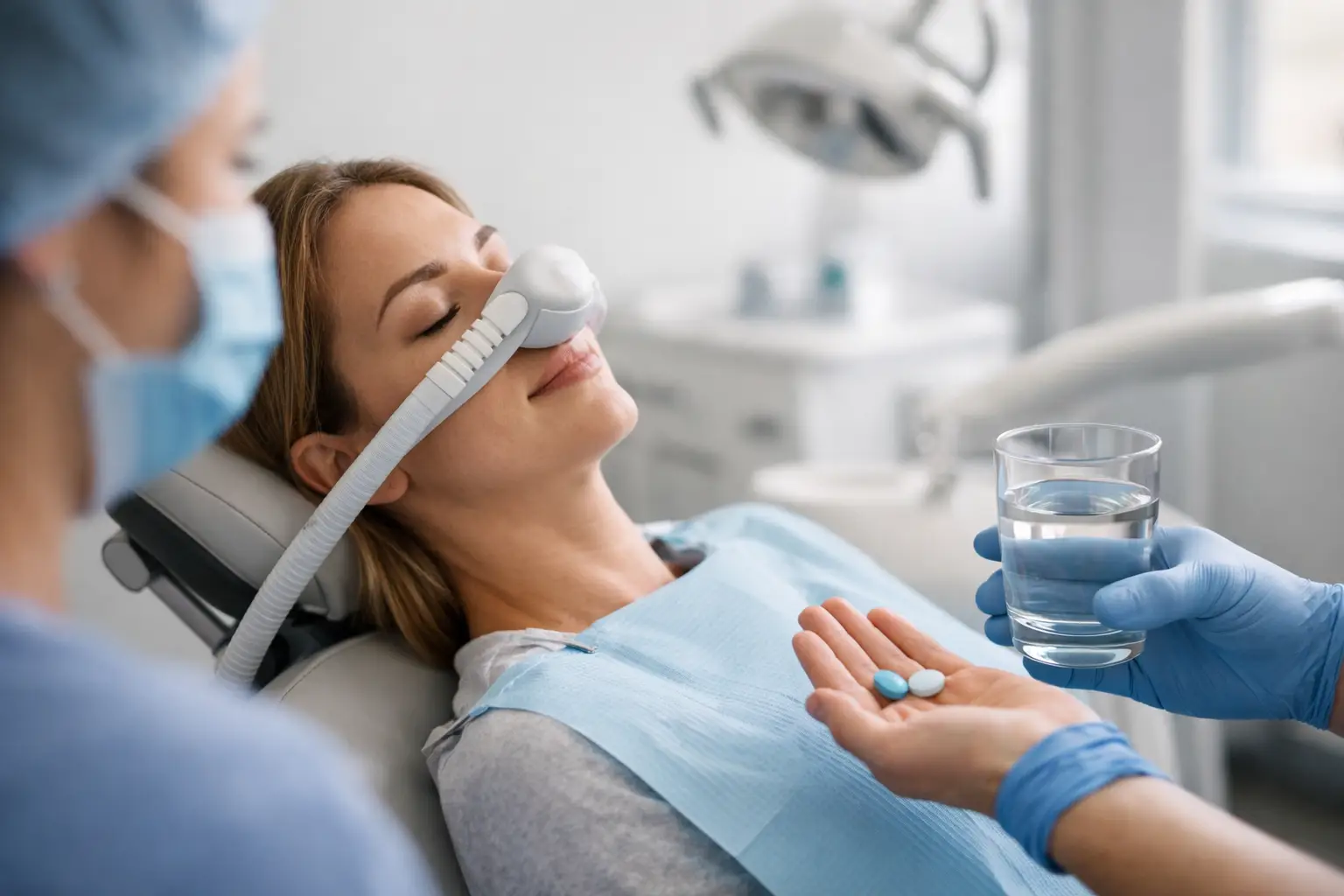
A dental appointment can feel manageable until you hear the sound of an instrument, remember a difficult past visit, or realize your treatment will take longer than expected. This guide to oral sedation dentistry explains how one carefully planned comfort option can help qualified patients receive the care they have been putting off without feeling overwhelmed.
Oral sedation is not about ignoring your concerns or rushing through treatment. It is about creating a calmer, more supported experience so your dental team can provide gentle, personalized care while you remain safe and comfortable. For many patients, that can make the difference between postponing necessary dentistry and moving forward with confidence.
What Is Oral Sedation Dentistry?
Oral sedation dentistry uses a prescribed medication taken by mouth before your appointment to reduce anxiety and help you feel deeply relaxed. Depending on the medication and dose selected for you, you may feel drowsy, peaceful, and less focused on the sights, sounds, and sensations of dental treatment.
Patients are usually still awake enough to respond to simple instructions, such as opening wider or turning their head. Many people remember little about the visit afterward, which can be especially helpful for those with strong dental fear. Oral sedation is different from general anesthesia, where a patient is fully unconscious and requires a different level of monitoring and care.
Your dentist will recommend the appropriate approach based on your health history, the procedure being performed, your level of anxiety, and other medications you take. The goal is not to use more sedation than necessary. The goal is to help you feel comfortable enough to receive excellent care.
Who May Benefit From Oral Sedation?
Oral sedation can be a helpful option for adults who experience significant anxiety before or during dental visits. Fear is not always dramatic. It can show up as trouble sleeping before an appointment, avoiding cleanings for years, feeling panicked in the chair, or canceling treatment even when a tooth is painful.
It may also be considered for patients with a sensitive gag reflex, difficulty sitting still for longer appointments, or a need for more extensive treatment. For example, someone completing several restorative procedures may prefer to have treatment organized efficiently during a relaxed visit rather than spreading it across many stressful appointments.
That said, oral sedation is not right for every patient or every procedure. Certain medical conditions, medications, pregnancy considerations, sleep-related breathing concerns, and alcohol or substance use can affect whether sedation is appropriate. An honest health review is essential. Your dentist may recommend a different comfort strategy if that is the safer choice.
How Oral Sedation Works at Your Appointment
The process starts well before you sit in the dental chair. During your consultation, your dental team reviews your medical history, current prescriptions and supplements, allergies, past experiences with anesthesia or sedation, and the details of your planned treatment. This conversation is an important part of safe care, not just paperwork.
If oral sedation is appropriate, you will receive specific instructions about when and how to take the prescribed medication. Some patients take it shortly before arriving, while others may be asked to take it at a different time based on the plan created by their dentist. Follow those instructions exactly, and do not take extra medication because you feel nervous.
Once the medication begins working, you will be escorted through your visit with additional comfort measures as needed. Local anesthetic is still used to numb the treatment area when appropriate. Sedation helps with anxiety and relaxation; it does not replace numbing medication for procedures that require it.
Your care team monitors you throughout treatment and communicates in a calm, clear way. Although time may feel like it passes quickly, the clinical standards for your procedure remain the same. Careful planning, attention to detail, and a gentle touch still matter.
What You May Feel
Most patients describe feeling warm, sleepy, or pleasantly detached from the usual stress of a dental appointment. You may be able to answer questions but have little interest in conversation. Your coordination and judgment can be affected, which is why recovery instructions are so important.
Responses vary from person to person. Your age, metabolism, anxiety level, medical history, and prescribed dose all play a role. A friend’s experience with sedation should not be used to predict your own. Personalized dosing and professional screening are what make the process safer and more reliable.
Preparing for a Sedation Dentistry Visit
A successful sedation visit begins with a little planning. Your dentist will give you instructions tailored to your procedure, including guidance about food and drinks. In many cases, patients are asked to avoid alcohol and to discuss any medications they regularly take before the appointment. Never stop a prescribed medication unless the clinician managing your care tells you to do so.
You will need a responsible adult to drive you to and from the office and stay available afterward. Even if you feel alert when treatment ends, the medication can continue affecting reaction time, memory, and decision-making for the rest of the day. Rideshare transportation may not meet the office’s requirements because you need a trusted adult who can help ensure you get home safely.
Clear your schedule after the appointment. Do not plan to return to work, attend a demanding event, make major decisions, operate machinery, exercise intensely, or care for young children on your own. Wear comfortable clothing and bring any requested information, such as an updated medication list.
If you develop a fever, respiratory illness, or any new health concern before treatment, contact the office. It may be safer to reschedule than to proceed while you are unwell.
Recovery: What to Expect After Oral Sedation
After treatment, drowsiness can last for several hours. You may feel a little unsteady, groggy, or forgetful, and some patients drift in and out of sleep at home. This is expected, but it is also why following discharge directions matters.
Rest in a comfortable place with your designated companion nearby. Drink fluids and eat only as directed, especially if your mouth is still numb from treatment. If you had a procedure such as an extraction, root canal, or deep cleaning, you may also receive care instructions specific to that treatment.
Avoid driving until the following day or until your dentist tells you it is safe. Avoid alcohol, recreational substances, and medications not approved by your dental team, since combining substances can create unsafe effects. If you have unusual symptoms, trouble breathing, persistent vomiting, or any concern about your recovery, contact your dentist promptly or seek emergency care when appropriate.
Questions to Ask Before Choosing Oral Sedation
Feeling informed can ease anxiety before you ever take medication. Ask what level of sedation is being recommended, why it fits your needs, and what you should expect before, during, and after treatment. You can also ask how your medical history affects the plan and whether there are alternatives if you prefer to begin with a less intensive comfort option.
It is reasonable to ask about the expected cost and whether sedation is separate from the cost of your dental procedure. Coverage varies widely, particularly when sedation is used for anxiety rather than a medical necessity. A clear financial discussion before treatment helps you make a decision without surprises.
Most importantly, share what has made dental care difficult for you. Whether your concern is needles, pain, loss of control, embarrassment about time away from the dentist, or a prior negative experience, your team should listen without judgment. The right plan may include oral sedation, but it should always include patience, communication, and respect.
For patients in West Hollywood and the greater Los Angeles area, West Hollywood Smile Dental can help you discuss comfort options in a private, supportive setting. Taking the first step can be as simple as scheduling a consultation and saying, “I’m nervous.” From there, a thoughtful care plan can help you return to the healthy smile and routine care you deserve.

How to Choose a Full Service Dentist You Trust