A dental crown has a practical job: protect a weakened tooth so you can bite, speak, and smile comfortably again. But the material chosen also affects how natural the crown looks, how it feels, and how well it holds up over time. A thoughtful crown material comparison is not about finding one “best” option for every patient. It is about matching the right restoration to the tooth, your bite, your health needs, and your smile goals.
For a visible front tooth, appearance may lead the conversation. For a back molar that handles heavy chewing, strength may matter most. At West Hollywood Smile Dental, we help patients understand those differences clearly, then create a personalized plan that supports both comfort and long-term oral health.
Crown Material Comparison: What Matters Most
A crown covers the entire visible portion of a tooth above the gumline. It may be recommended after significant decay, a large filling, a root canal, a fracture, or when a tooth needs added support. Crowns can also be part of a cosmetic treatment plan when shape, color, or alignment needs improvement.
When comparing materials, your dentist will look beyond the shade of your teeth. The location of the tooth, the amount of healthy tooth structure remaining, your bite force, whether you grind or clench, gum health, and any metal sensitivities all matter. Budget and insurance coverage may also be part of the decision, but the lowest initial cost is not always the best value if the material is not suited to the tooth.
All-Ceramic and Porcelain Crowns
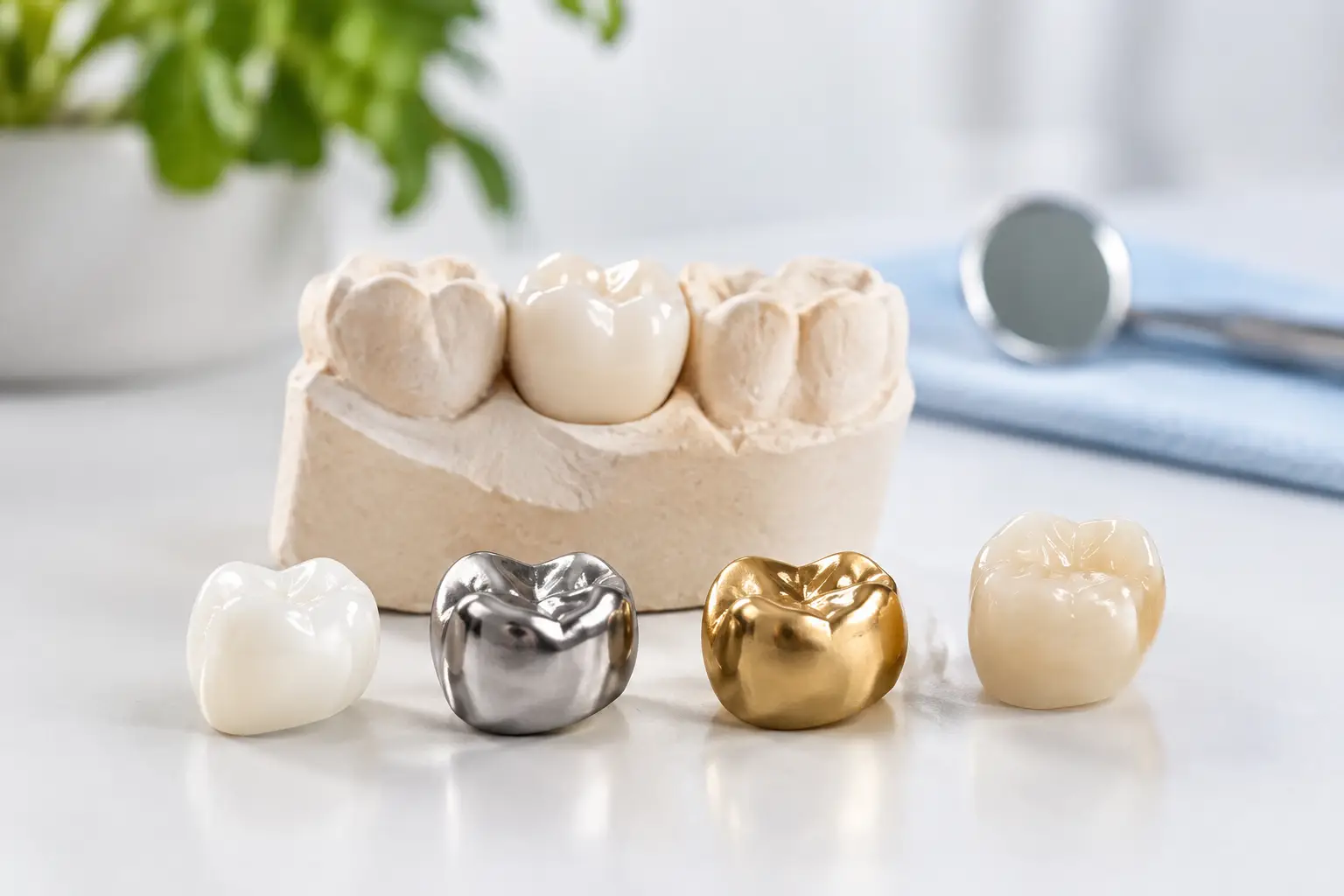
All-ceramic crowns, often referred to as porcelain crowns, are known for their lifelike appearance. They reflect light in a way that closely resembles natural enamel, making them a popular choice for front teeth and other highly visible areas of the smile.
A skilled dental team can customize the color, translucency, and shape so the crown blends with neighboring teeth rather than looking flat or overly bright. This is especially valuable for patients who want a refined cosmetic result after damage, discoloration, or a root canal.
The trade-off is that not every ceramic is ideal for every bite. Some highly translucent ceramics are designed primarily for esthetics and may not be the first choice for a patient with intense clenching or a heavily used molar. Modern ceramics are strong, but material selection and proper crown design remain essential. If appearance is your top priority, your dentist can explain which ceramic offers the right balance of beauty and durability.
When porcelain may be a strong choice
Porcelain or all-ceramic crowns are often well suited to front teeth, premolars, and patients with metal allergies or sensitivities. They can also be an excellent option for patients who prefer a metal-free restoration. The final choice depends on the specific ceramic used and the demands placed on that tooth.
Zirconia Crowns
Zirconia is a high-strength ceramic that has become a leading option for modern dental crowns. It is exceptionally durable and can withstand substantial chewing forces, which makes it particularly useful for molars and for patients who grind their teeth.
Earlier zirconia crowns were sometimes less natural-looking than layered porcelain because they could appear more opaque. Today, newer multilayer and high-translucency zirconia options offer much better esthetics while retaining impressive strength. That versatility allows zirconia to work well in many areas of the mouth.
Still, zirconia is not automatically the answer for every restoration. Some situations call for the delicate translucency of another all-ceramic material, particularly on a front tooth with distinctive natural enamel. Zirconia can also be very hard, so careful adjustment and polishing are important to help protect the opposing teeth. When properly planned, however, it is a reliable material for patients who need durable, natural-looking support.
Porcelain-Fused-to-Metal Crowns
Porcelain-fused-to-metal crowns, often called PFMs, combine a metal base with a porcelain exterior. The metal framework adds strength, while the porcelain helps the crown resemble a natural tooth. For many years, PFMs were a standard choice for crowns and bridges.
They remain useful in select cases, especially when a dentist needs the stability of a metal substructure. However, they have a few cosmetic limitations. If gums recede over time, a dark line near the gumline can become visible. The porcelain layer can also chip in some cases, revealing the underlying metal.
For a back tooth, these concerns may be less noticeable. For a front tooth, many patients now prefer all-ceramic options that provide a more natural transition at the gumline. A PFM crown may still be appropriate, but it should be chosen because it fits your clinical needs, not simply because it has been used for decades.
Gold and Full-Metal Crowns
Gold alloy and other full-metal crowns have a well-earned reputation for durability. They are highly resistant to fracture, require less removal of natural tooth structure than some alternatives, and tend to be gentle on opposing teeth. For a hard-working molar, those are meaningful advantages.
Their obvious limitation is appearance. Most patients do not want a visible metal crown in the front of the mouth, though some appreciate the distinctive look of gold or prioritize longevity over color matching. Full-metal crowns are also not appropriate for anyone with a relevant metal allergy.
Although they are less common in cosmetic-focused treatment plans, gold crowns remain a sound option for certain back teeth. This is a good example of why crown decisions should be individualized: what is ideal for an out-of-sight molar may be completely different from what is right for a central front tooth.
Which Crown Material Is Best for Front Teeth?
For front teeth, the goal is usually a restoration that looks like it belongs in your smile. All-ceramic crowns are frequently favored because they can mimic enamel’s subtle translucency and avoid a dark metal edge near the gums. High-translucency zirconia may also be appropriate when additional strength is needed.
The best result depends on more than material. Shade matching, the contour of the crown, gumline symmetry, and the condition of adjacent teeth all affect the final appearance. If a front crown is part of a larger smile makeover, your dentist may recommend whitening first so the new crown can be matched to your preferred tooth color. Crowns do not whiten after placement, so planning the sequence matters.
Which Crown Material Is Best for Back Teeth?
Back teeth absorb most of the force from chewing. Zirconia is often an excellent choice for molars because of its strength and resistance to cracking. Full-metal crowns may also be recommended when maximum durability and conservative tooth preparation are the main concerns.
Ceramic crowns can work well in the back of the mouth too, particularly for patients who want a metal-free restoration. The deciding question is not simply whether the tooth is a molar. Your dentist will consider how much force your bite places on that tooth, whether you have a history of broken restorations, and whether you clench or grind at night.
If bruxism is a concern, a custom night guard may help protect both your natural teeth and your crown. A well-made crown is strong, but it is not meant to absorb years of unchecked grinding without support.
Questions to Ask During a Crown Consultation
A clear conversation can make the decision feel much less overwhelming. Ask which material is recommended for your specific tooth and why. You may also want to ask how the material will look next to your natural teeth, what maintenance it requires, and whether a night guard is advisable.
It is reasonable to discuss expected longevity and costs, too. No dentist can promise an exact lifespan, because crowns are affected by bite forces, oral hygiene, diet, accidents, and regular dental care. With consistent brushing, flossing, routine exams, and prompt attention to any changes, many crowns can serve patients well for years.
A crown should feel comfortable, function naturally, and give you confidence when you smile. The right material is the one that respects the needs of your tooth while supporting the smile you want to keep.