Clear Aligners for Adults: What to Expect
A lot of adults spend years thinking about straightening their teeth, then put it off because braces feel too visible, too inconvenient, or too disruptive to work and social life. That is exactly why clear aligners for adults have become such a popular option. They offer a more discreet way to improve alignment while fitting more comfortably into a busy schedule.
For many patients, the appeal is obvious. Aligners are removable, easier to clean around than brackets and wires, and often feel more compatible with professional settings. But they are not the right answer for every smile, and the best results come from understanding both the advantages and the limits before you begin.
Why adults choose clear aligners
Most adults are not starting orthodontic treatment on a whim. They usually have a specific reason. Some never had braces as a teen. Others had orthodontic treatment years ago and have noticed their teeth shifting back. Many are motivated by appearance, but function matters too. Crowded or uneven teeth can make brushing and flossing harder, create bite issues, and contribute to uneven wear.
Clear aligners appeal to adults because they are designed around real life. You can remove them for meals, important events, and brushing. There are no dietary restrictions in the same way there are with traditional braces. For professionals, parents, and anyone frequently in meetings or on camera, that lower-profile look can make treatment feel much more manageable.
There is also a comfort factor. While any orthodontic treatment involves pressure as teeth move, aligners do not come with metal brackets or wires that can rub against the cheeks and lips. For adults who already feel hesitant about treatment, that difference can matter.
How clear aligners for adults work
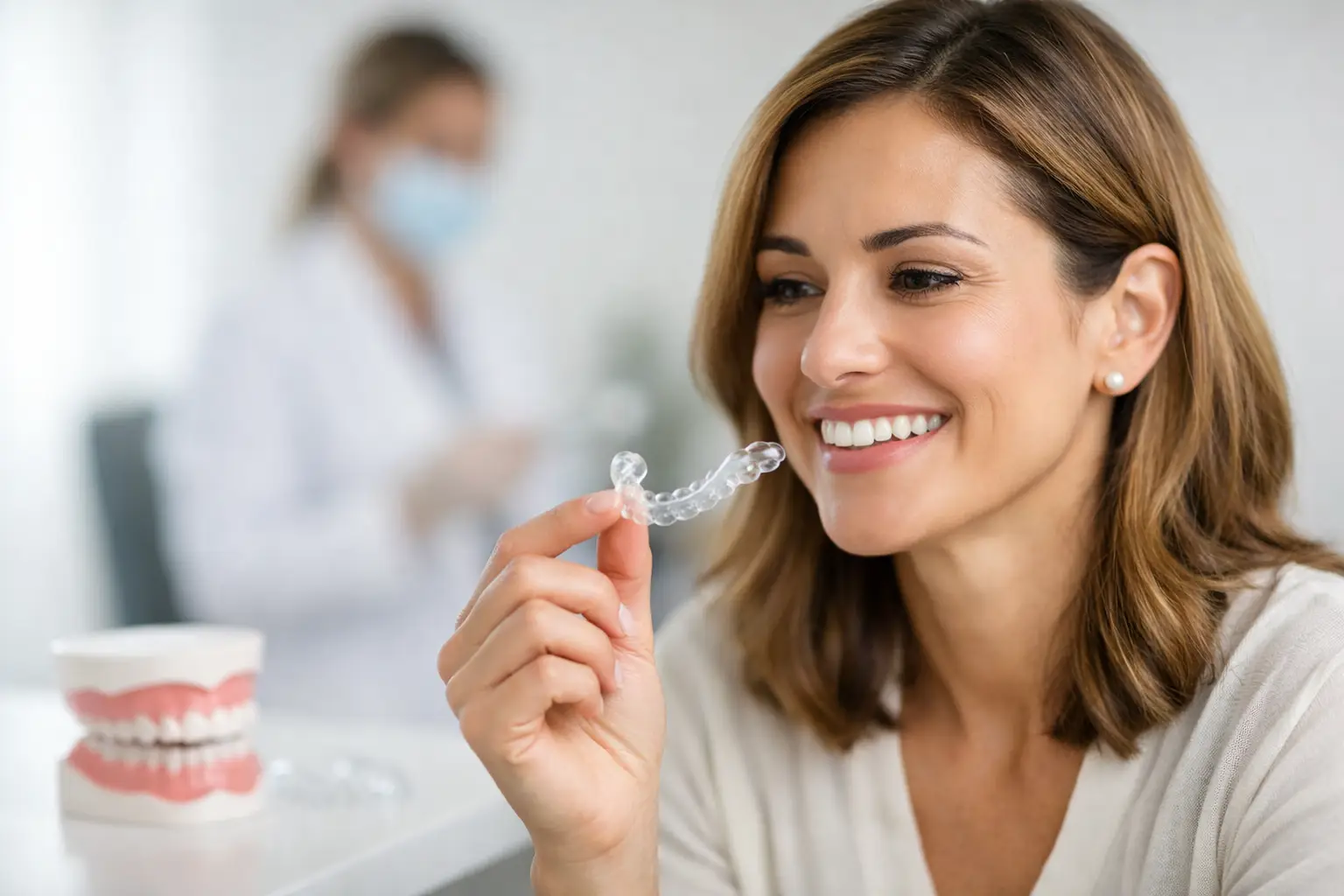
Clear aligners for adults use a series of custom-made trays that gradually shift the teeth into better position. Each set is worn for a prescribed period, often around one to two weeks, before moving on to the next. The trays are created based on digital scans or impressions, along with a detailed treatment plan that maps out the tooth movement.
The process sounds simple, but good planning is what makes it effective. Adult teeth may need more precise movement because of existing dental work, past shifting, gum health concerns, or bite changes that have developed over time. That is why an in-person exam is still so important. A digital model can show where teeth should go, but it takes a trained dentist to evaluate whether the teeth, gums, bone support, and bite make aligners a smart choice.
Most patients need to wear aligners 20 to 22 hours a day. That is the part people sometimes underestimate. Because they are removable, success depends heavily on consistency. If aligners spend too much time out of the mouth, treatment can slow down or become less predictable.
Who is a good candidate
Adults with mild to moderate crowding, spacing, or relapse after earlier orthodontic treatment are often good candidates for aligners. They can also help correct certain bite issues, though the exact answer depends on how complex the problem is.
This is where expectations need to stay realistic. Some cases are very straightforward. Others sit in a gray area where aligners may still work, but only with attachments, refinements, or a longer timeline. And some cases are simply better treated with braces or a combination approach.
If you have significant tooth rotation, severe bite imbalance, advanced gum disease, or complex jaw alignment issues, clear aligners may not be the most efficient option. Adults also often have crowns, bridges, implants, or worn teeth, and each of those factors can affect treatment planning. An implant, for example, does not move like a natural tooth, so the surrounding teeth must be planned around it.
That does not mean aligners are off the table. It means the best treatment starts with a personalized evaluation rather than a one-size-fits-all promise.
What treatment feels like day to day
Most adults describe the first few days of each new aligner tray as snug rather than painful. The pressure is a sign that the teeth are moving. You may notice mild soreness, especially when removing the trays to eat, but it usually settles quickly.
Speech can sound slightly different at first, particularly with certain words, though most patients adjust within a few days. Dry mouth can happen early on too. These small changes are temporary, but they are worth knowing ahead of time.
Daily habits matter more than many people expect. You have to remove aligners before eating or drinking anything besides water. After meals, you should brush before putting them back in, or at least rinse thoroughly if you are away from home. That routine can feel like a chore at first, but many adults end up seeing it as a helpful structure that improves their oral hygiene overall.
The pros and the trade-offs
The biggest benefit of clear aligners is discretion. For adults who want orthodontic treatment without drawing attention to it, that alone can be a deciding factor. They are also easier to remove for brushing and flossing, which can make it simpler to keep the teeth and gums healthy during treatment.
Convenience is another major advantage, especially for patients balancing work, family, and social commitments. In many cases, appointments are quick and efficient, focused on tracking progress and making any needed adjustments.
Still, there are trade-offs. Removable treatment only works if you actually wear it. Adults who snack frequently, drink coffee all day, or know they struggle with routines may find compliance harder than expected. Aligners also require discipline when traveling, dining out, or attending events.
Aesthetics can be excellent, but attachments are sometimes needed to help certain teeth move. These small tooth-colored shapes are much less noticeable than braces, though they are not completely invisible. Treatment can also involve refinements at the end, which means extra trays after the initial series to fine-tune the result.
Cost and value
Cost is one of the first questions adults ask, and reasonably so. The price of clear aligners depends on case complexity, treatment length, and whether additional refinements or related care are needed. In some cases, aligners are comparable in cost to braces. In others, the fee may vary depending on how simple or involved the plan is.
The better question is often value rather than price alone. If treatment improves your bite, makes cleaning easier, reduces uneven wear, and helps you feel more confident smiling, that value extends beyond appearance. At the same time, adults should want honest guidance. Not every case requires cosmetic treatment, and not every cosmetic concern needs orthodontics first.
A quality consultation should include a clear explanation of what aligners can realistically fix, how long treatment may take, and what financial options are available. That kind of transparency helps patients make decisions with confidence.
Why adult orthodontics should start with a full dental evaluation
One of the biggest mistakes adults make is viewing aligners as a stand-alone purchase instead of part of their oral health. Straightening teeth is not just about moving them into a prettier position. The condition of your gums, existing dental work, enamel, bite, and jaw function all matter.
That is why many adults benefit from starting in a full-service dental office where preventive, cosmetic, and restorative needs can be considered together. If you need a cleaning, fillings, treatment for gum inflammation, or a discussion about whitening or cosmetic bonding after alignment, those pieces can be planned in the right order rather than treated as separate problems.
For patients in West Hollywood and nearby Los Angeles communities, that coordinated approach can save time and reduce stress. It also tends to produce a more complete result because the smile is evaluated as a whole, not just as a set of crooked teeth.
What happens after treatment
Finishing aligner treatment does not mean your teeth are done moving forever. Retainers are essential. Teeth naturally want to shift, especially in adulthood. Without retention, even beautifully completed treatment can gradually relapse.
Your dentist will usually recommend a retainer schedule based on your case, but the long-term message is simple: protecting the result is part of the treatment. Adults who commit to that final step are much more likely to keep the smile they worked for.
If you have been considering clear aligners for years, the next step does not have to feel overwhelming. A thoughtful consultation can tell you whether they are the right fit, what your timeline may look like, and how to move forward in a way that feels comfortable, realistic, and worth it.
Professional Teeth Whitening Cost Explained