
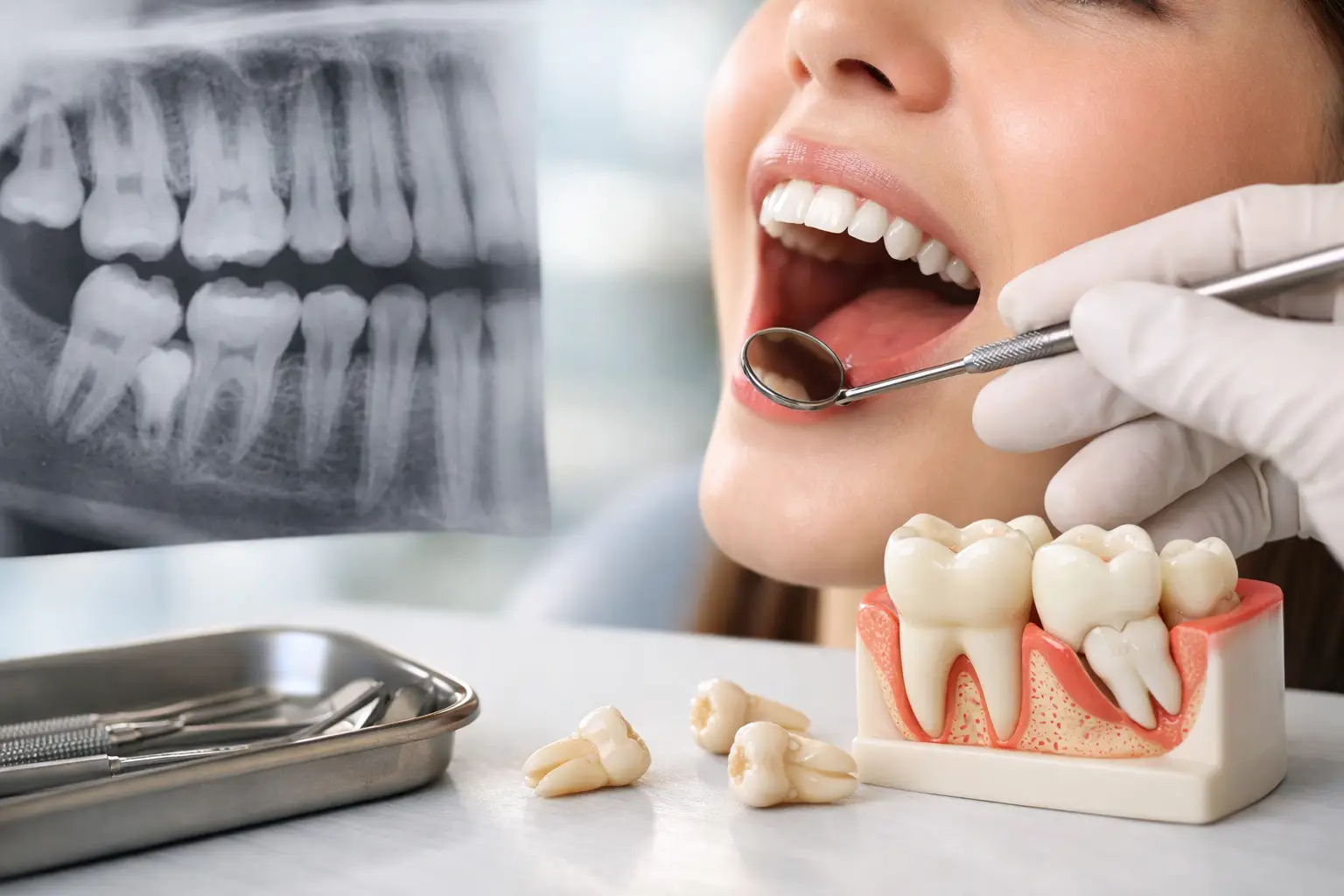
Wisdom teeth can stay quiet for years, then suddenly make themselves known with a swollen gum, jaw pressure, or a sharp ache near the back of the mouth. Patients often ask, “When should wisdom teeth come out?” The honest answer is not based on age alone. It depends on how the teeth are positioned, whether there is enough room for them, and whether they are creating a present or future risk to your oral health.
For some people, wisdom teeth erupt normally and remain healthy. For others, removing them before they cause a painful infection, damage a neighboring tooth, or interrupt daily life is the better path. A professional exam and digital imaging provide the clearest answer.
When Should Wisdom Teeth Come Out?
Wisdom teeth are the third molars, located at the very back of the upper and lower jaws. They commonly begin developing during the teenage years and may erupt between ages 17 and 25, although timing varies widely. Their arrival is not automatically a reason for extraction.
Removal is usually recommended when a wisdom tooth is impacted, partially erupted, difficult to keep clean, decayed, infected, or putting pressure on the tooth beside it. Your dentist may also advise removal if X-rays show that the tooth is likely to cause problems as its roots continue to form.
The goal is not to remove wisdom teeth simply because they exist. It is to protect your comfort, bite, gums, and the healthy teeth you already have.
Signs Your Wisdom Teeth May Need Attention
A wisdom tooth does not always cause obvious pain right away. In fact, a tooth can be creating a problem below the gumline before you notice any symptoms. Still, certain changes deserve a dental evaluation soon.
Pain or pressure at the back of the jaw is one common sign. You may feel soreness when chewing, opening wide, or brushing near the last molar. Swollen, tender, or bleeding gums around a partially erupted wisdom tooth can also indicate inflammation or infection.
A bad taste, persistent bad breath, or drainage from the area may occur when food and bacteria become trapped under a flap of gum tissue. This condition, called pericoronitis, can return repeatedly if the tooth remains difficult to clean.
Other warning signs include facial swelling, a stiff jaw, recurring headaches, or a visible cavity in the wisdom tooth or the tooth in front of it. If you have fever, significant swelling, trouble swallowing, or difficulty breathing, seek urgent dental or medical care. Those symptoms can signal a spreading infection that should not wait.
Impacted Wisdom Teeth Often Need Removal
An impacted wisdom tooth is blocked from erupting into a normal position. It may be trapped under the gums, enclosed in bone, or angled toward another tooth. Some impacted teeth stay stable for a lifetime, but many create risks that are difficult to manage with brushing and flossing alone.
A partially erupted lower wisdom tooth is especially prone to collecting plaque, food particles, and bacteria. Because it sits so far back in the mouth, even people with excellent home care may struggle to clean it thoroughly. Recurrent gum infections are often a strong reason to discuss extraction.
When a wisdom tooth presses against the second molar, it can contribute to decay, gum damage, or loss of bone around that healthy tooth. In some cases, a cyst can develop around an impacted tooth. These concerns are not always painful at first, which is why routine exams and X-rays matter.
Is There a Best Age for Wisdom Tooth Removal?
Many wisdom tooth extractions are performed in the late teens or early twenties. At this stage, the roots may not be fully developed, and the surrounding bone is often less dense. That can make the procedure and recovery more straightforward for some patients.
However, there is no expiration date on safe wisdom tooth treatment. Adults in their 30s, 40s, and beyond can have wisdom teeth removed successfully when there is a clinical reason. Recovery can take a little longer as roots mature and bone becomes denser, but age is only one part of the decision.
Waiting can make sense when wisdom teeth are fully erupted, healthy, easy to clean, free of gum disease, and not harming nearby teeth. In that case, your dentist may recommend monitoring them during regular checkups instead of scheduling removal. A personalized recommendation should account for your X-rays, symptoms, medical history, and ability to maintain the area at home.
Why “No Pain” Does Not Always Mean “No Problem”
It is reasonable to question an extraction when a wisdom tooth is not bothering you. But comfort today does not always predict long-term health. A deeply impacted tooth may be close to neighboring roots, or a partially erupted tooth may be creating a hard-to-reach pocket where infection can develop later.
Your dentist will look at more than symptoms. Digital X-rays reveal the tooth’s angle, root shape, bone level, and relationship to nearby structures. For lower wisdom teeth, evaluating their proximity to the nerve in the jaw is particularly important. For upper wisdom teeth, the sinus area may be considered.
This information helps your dental team weigh the benefits of early removal against the benefits of monitoring. Thoughtful care means avoiding both unnecessary treatment and unnecessary waiting.
What to Expect From a Wisdom Tooth Consultation
A consultation should leave you with clear answers, not more uncertainty. Your dentist will review your health history, examine the gums and neighboring teeth, and take or review digital X-rays. If extraction is recommended, you should understand why, how many teeth need treatment, and what kind of anesthesia or sedation may support your comfort.
Some extractions are relatively simple because the tooth is fully erupted. Others require a surgical approach, particularly when a tooth is impacted or positioned under the gums. A skilled team will explain the procedure in plain language and discuss practical details such as medications, time away from work or school, and recovery expectations.
At West Hollywood Smile Dental, patients can receive a personalized evaluation and coordinated care in one office, with a focus on gentle treatment and a calm, well-supported experience.
Recovery: Plan for a Few Quiet Days
Most people need a few days of reduced activity after wisdom tooth removal. Swelling and tenderness are common, especially after lower or impacted teeth are removed. Following post-operative instructions closely helps protect the blood clot and lowers the risk of dry socket, a painful complication that can occur when the clot is disturbed too early.
Plan on soft foods, hydration, and rest for the first day or two. Avoid smoking, using straws, vigorous rinsing, and strenuous exercise during the period your dentist recommends. Use prescribed or recommended pain relief exactly as directed, and contact the office if pain worsens after initially improving, bleeding continues, or swelling becomes severe.
Recovery is not identical for every patient. Removing one fully erupted tooth may involve minimal downtime, while four impacted wisdom teeth can require more planning. Scheduling treatment before a major trip, important event, or demanding work week may be wise.
Make the Decision Before an Emergency Makes It for You
Wisdom tooth problems have a way of appearing at inconvenient times – before a flight, during a busy work stretch, or in the middle of a family weekend. A routine evaluation gives you the chance to make a calm, informed decision rather than reacting to sudden pain or swelling.
If you have noticed pressure, recurring gum irritation, trouble cleaning the back of your mouth, or have not had your wisdom teeth evaluated recently, a dental exam can bring clarity. The right timing is the point at which removal offers more protection than waiting, and that decision is best made with careful imaging, clinical experience, and your comfort in mind.