Bleeding when you floss, persistent bad breath, or gums that look like they are pulling away from your teeth can be more than a minor nuisance. They may be signs of gum disease. A laser gum therapy review often starts with one question: can a laser make periodontal treatment more comfortable without compromising results? For the right patient, laser treatment can be a valuable part of care. It is not a shortcut or a replacement for daily home care, but it may help treat infected gum tissue with a gentle, precise approach.
What Is Laser Gum Therapy?
Laser gum therapy uses focused light energy to remove or reduce diseased tissue and bacteria around the teeth. Gum disease begins when plaque and tartar accumulate below the gumline, causing inflammation. Over time, the gums can separate from the teeth and form periodontal pockets where bacteria continue to thrive.
Traditional deep cleaning, also called scaling and root planing, removes hardened buildup from the tooth roots. Laser therapy may be used alongside this cleaning to target inflamed tissue, reduce bacteria in the pocket, and support healing. The exact approach depends on the type of laser used, the depth of the pockets, the condition of the bone, and your overall oral health.
This distinction matters. A laser does not magically remove every trace of periodontal disease, and it cannot rebuild bone that has already been lost. It is a treatment tool that may improve comfort and precision as part of a personalized periodontal plan.
Laser Gum Therapy Review: The Potential Benefits
Many patients are most interested in whether laser treatment feels easier than conventional gum procedures. Because a dental laser can target tissue with precision, some patients experience less bleeding, swelling, and discomfort during recovery. Depending on the procedure, the laser may also help seal small blood vessels and nerve endings as it works.
That can be meaningful for someone who has put off periodontal care because they are worried about soreness or the appearance of their gums afterward. In many cases, patients can return to normal routines quickly, though the timeline varies with the extent of treatment.
Laser therapy can also offer a conservative option when treating infected tissue around the teeth. Rather than making broad incisions, the dentist can use the laser selectively in periodontal pockets. For patients who value a gentle touch and efficient care, this can be a reassuring advantage.
There is also an aesthetic consideration. Healthy gums frame a healthy smile. When inflammation is controlled, gums may look less red, puffy, or tender. Still, the main purpose of treatment is protecting the bone and tissues that support your teeth, not simply improving appearance.
What the Treatment Appointment Is Like
A proper gum disease evaluation comes before any laser is used. Your dentist will examine your gums, measure periodontal pockets, review X-rays when needed, and look for signs such as bleeding, bone loss, loose teeth, or gum recession. This assessment determines whether laser therapy is appropriate and whether you may need deep cleaning, surgery, restorative treatment, or a combination of services.
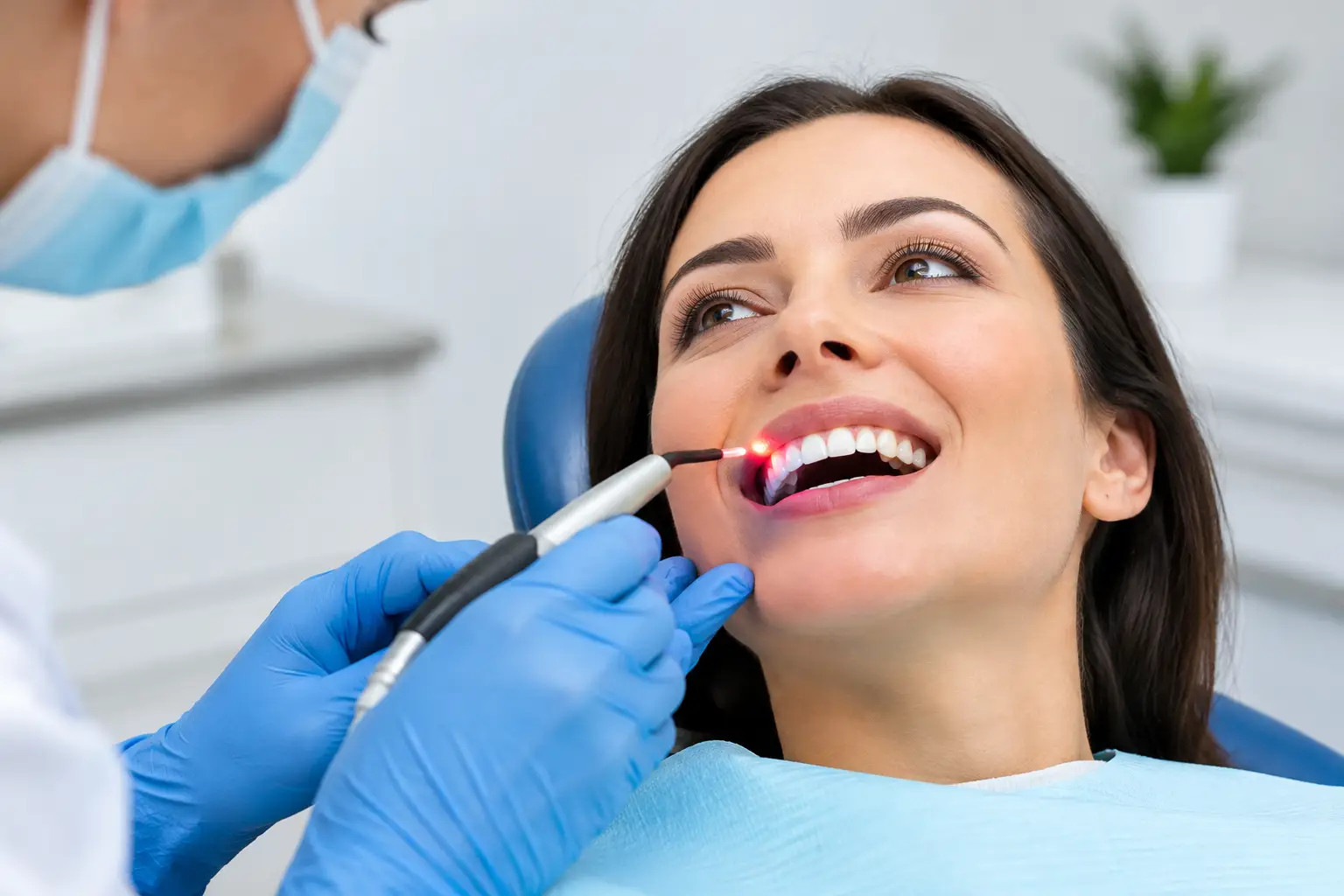
If laser therapy is recommended, local anesthetic may be used to keep the area comfortable. The dentist or periodontal provider guides a small laser tip into the gum pocket to address inflamed tissue and bacteria. Deep cleaning may then be performed to remove tartar from the root surfaces. In some cases, the laser is used again to help manage the treated area.
The appointment length depends on how many areas need care. Mild disease may be treated in a relatively straightforward visit, while advanced periodontal disease can require treatment in stages. Your dental team should explain what will happen, how long it may take, and what you are likely to feel before treatment begins.
Recovery: What Is Normal and What Is Not
After laser gum therapy, mild tenderness, sensitivity, or a slight change in how your gums feel can be normal. Some patients notice minimal discomfort, while others need a few days before the area feels fully settled. Following aftercare instructions matters just as much as the procedure itself.
You may be asked to eat softer foods briefly, avoid smoking, and use a prescribed rinse or medication if indicated. Brushing and flossing instructions may be adjusted while the gums heal. Do not assume that no pain means no follow-up is needed. Periodontal disease requires ongoing monitoring because it can return when bacterial buildup is allowed to accumulate again.
Call your dental office if you have heavy bleeding, worsening pain, fever, swelling that increases rather than improves, or any concern that does not feel right. Patients deserve clear guidance after treatment, not guesswork.
Limits and Trade-Offs to Consider
An honest laser gum therapy review should include the limitations. Laser treatment is not right for every case. When there is significant bone loss, very deep pockets, complex root anatomy, or teeth with a poor long-term prognosis, a more extensive periodontal procedure or referral may be necessary.
Results also depend on the clinician’s training, the laser technology used, and whether the treatment plan addresses the actual source of disease. If tartar remains on root surfaces, inflammation can persist. For that reason, laser therapy is commonly paired with meticulous deep cleaning rather than presented as a stand-alone cure.
Cost is another practical consideration. Insurance coverage varies widely and may cover periodontal treatment while not covering every laser-related portion of care. Ask for a written estimate that explains what is included, what insurance may pay, and what your out-of-pocket responsibility could be. A trustworthy recommendation should be based on your clinical needs, not pressure to choose the most expensive option.
Who May Be a Good Candidate?
Laser gum therapy may be worth discussing if you have signs of gum disease and want to explore a minimally invasive option. It can be especially appealing for people with bleeding gums, persistent periodontal pockets, gum tenderness, or anxiety about traditional surgical procedures.
Your medical history is relevant, too. Conditions such as diabetes can affect gum health and healing. Smoking and vaping increase the risk of periodontal disease and can make treatment less predictable. Medications, pregnancy, immune conditions, and a history of dental treatment should all be part of the conversation.
The best candidate is not simply someone who wants laser treatment. It is someone whose examination shows that a laser can contribute meaningfully to better periodontal health. At West Hollywood Smile Dental, that means looking at the whole picture: your gums, teeth, bite, comfort needs, treatment goals, and ability to maintain results at home.
Questions to Ask Before You Decide
Before agreeing to treatment, ask what stage of gum disease you have and what the laser is intended to accomplish in your specific case. You should also understand whether the plan includes scaling and root planing, how many visits are expected, what recovery may look like, and how success will be measured at follow-up appointments.
It is also reasonable to ask about alternatives. In some cases, conventional deep cleaning may be all that is needed. In others, a surgical procedure may provide the most predictable outcome. A good dentist will explain the benefits and trade-offs plainly, including what could happen if treatment is delayed.
Protecting Your Results Over Time
The most successful periodontal treatment plan continues after the appointment. Brush twice a day with a soft-bristled toothbrush, clean between your teeth daily, and keep recommended periodontal maintenance visits. These visits are often scheduled more frequently than standard cleanings because gum disease needs closer supervision.
If your gums bleed, do not stop brushing or flossing without asking your dentist. Bleeding is often a sign of inflammation, and gentle, consistent plaque removal is part of getting that inflammation under control. The goal is a mouth that feels comfortable, functions well, and supports your natural teeth for as long as possible.
A laser can be a helpful part of gum treatment, but the real value comes from a thoughtful diagnosis, skilled care, and a maintenance plan you can realistically follow. If you have noticed changes in your gums, a focused periodontal evaluation can give you clear answers and a path forward that feels manageable.